
Riyadh rolled out the red carpet for the International MICE Summit 2025 (IMS25) and, the meetings world, more than 3000 of them, arrived with pens poised and wallets open. From the get go, it was clear the IMS25 was less summit, and more a very loud announcement that Saudi Arabia intends to be a global events heavyweight.
Across two days of plenaries, innovation clusters, investor workshops and future-leader forums, organisers, venues and global exhibition giants set out not just what’s coming, but how to capitalise on it. Key headlines included around 20 major agreements and MoUs were signed; global exhibition firms confirmed market entry; and national venue capacity climbed sharply. This is evidence that Vision 2030’s MICE ambitions are now translated into contracts and square metres.
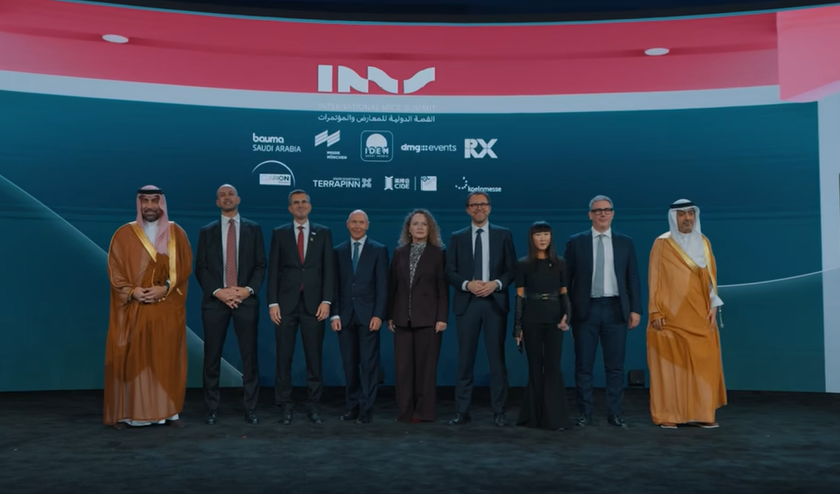
Programme highlights
The IMS25 programme was exhaustive and strategic, built around three core impulses: scale up (infrastructure and global partnerships), smart up (technology, measurement and data) and skill up (human capital and public-private collaboration). Organisers structured the content so every stakeholder (especially destination authorities, PCOs/PEOs, venue operators, suppliers and exhibition organisers) had actionable takeaways.
Opening plenaries framed the national ambition, positioning Saudi Arabia as the fastest-growing business events destination in the G20 and Vision 2030 as the engine of expansion. From there, sessions drilled into concrete topics:
- Beyond the bid: how Saudi is assembling talent, infrastructure and regulatory frameworks to become a reliable host for global events, backed by high-profile MoUs and a development pipeline of new venues.
- Marquee events as economic catalysts: how BAUMA Saudi and MIPIM Arabia (announced at the summit) demonstrate the strategy of importing major global brands to seed sector growth and attract international buyers and exhibitors.
- Venues of the future: “Beyond Walls” conversations mapped how AI, data and human-centred design will turn convention centres from halls into intelligent, engagement platforms. The Innovation Cluster and investor workshops made this tangible by matching giga projects with capital and operator know-how.
- Delivering events amid uncertainty: practical panels addressed shortening lead times, economic volatility and contingency planning. Speakers stressed flexible contracting, modular set-ups and risk-sharing between organisers and venues.
- Profit and impact measurement: sessions urged MICE players to move beyond flattering vanity metrics to hard KPIs that prove ROI: conversion of MoUs to contracts, direct economic impact, TRevPAR and sponsorship yield. Measuring impact was framed as crucial for unlocking investor confidence and government support.
- Exhibitions innovation: immersive experiences, sustainability in build materials, VR/AR engagement and gamified stands were showcased as ways to increase dwell time and exhibitor ROI.
- Public-private co-design and human capital: discussion on talent pipelines, training and certification highlighted the need for workforce development to match rapid infrastructure growth.
- Sustainability as standard: “from nice-to-have to need-to-have” – the summit elevated ISO 20121 and practical sustainability interventions across venue operations and exhibitor practices.
Scale indicators
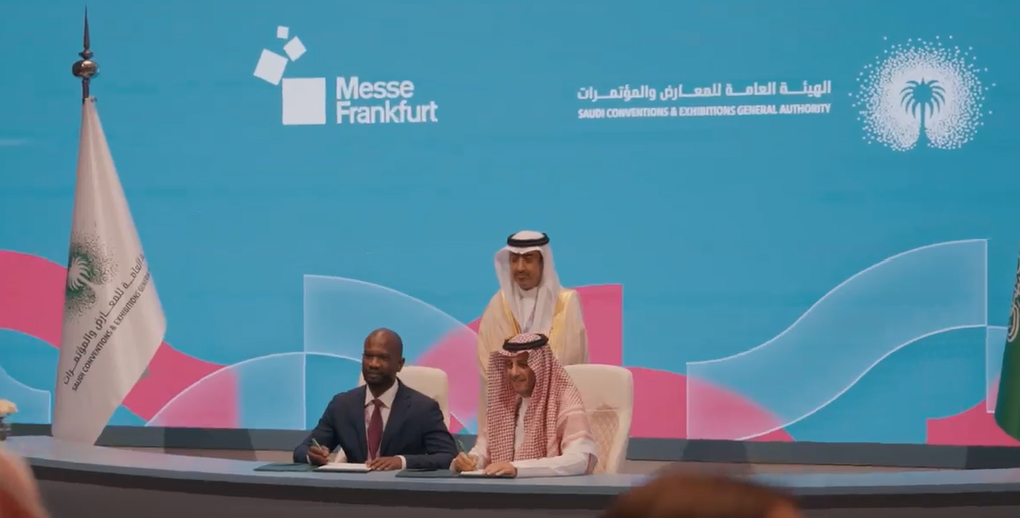
Organisations including Messe Frankfurt, Koelnmesse, MCH Group and Oak View Group confirmed market entry; Comexposium and Honegger signalled 2026 entries.
Large new event launches were revealed (for example BAUMA Saudi and MIPIM Arabia), and at the national level almost 20 agreements and MoUs were inked with ministries and regional authorities.
Saudi’s Venue Infrastructure Report, released around the summit, shows accredited venues rose to 923 (a reported 32% year-on-year increase), while exhibition space has ballooned since 2018. These announcement are curves of capacity and global operator commitment.
The ideas that truly stole the spotlight
1. Giga scale partnerships is the new normal
What shifted at IMS25 was not just talk of partnerships but the type and scale of them: established global exhibition houses establishing on-the-ground offices, and event brands launching regional editions. That matters because it shortens market entry friction, brings technical know-how, and anchors global exhibitors who will bring buyers. For local organisers and venues, these moves de-risk portfolio growth: when a global organiser commits, it brings pipeline, marketing muscle and trust from international delegations. The strategic implication is immediate — destinations that can offer reliable logistics, incentives and local partnerships will bag flagship events.
2. Venue transformation from bricks to platforms
Sessions on “Beyond Walls” articulated a future where venues are tech ecosystems — integrated data, real-time analytics, adaptive spaces and hybrid broadcast capability. The vision is not simply to host conferences but to operate venues as year-round platforms that monetise digital content, provide modular floor plans and deliver measurable audience engagement. Operators who invest in modular build, connectivity and data layers will win higher ARPUs from organisers and exhibitors.
3. Shortening lead times demands contract and operational agility
Organisers and PCOs told a consistent story: geopolitical shifts and economic volatility compress lead times. The industry’s response can’t be purely tactical; it requires contractual innovation (flexible penalties, hybrid cancellation clauses), supply chain readiness (local AV and build partners), and product modularity (pre-designed kits that reduce setup time). Convention bureaus that offer flexible, staged offers and fast permitting will become preferred partners.
4. Measurement and accountability are non-negotiable
The summit’s emphasis on showing impact (not just its impressive attendance) is a wake-up call. Funders, governments and sponsors now demand transparent KPIs for jobs created, spend per delegate, MoU conversion rates and carbon footprint metrics. The ability to report fast, accurately and compellingly will determine which bids get public backing and which events scale.
5. Human capital is the soft power that will harden outcomes
Rapid capacity expansion is pointless without trained local talent. Sessions on education and training argued for sector-specific curriculums, on-the-job micro-credentials and public-private co-funded apprenticeships. The region’s aggressive expansion requires parallel investment in skills to avoid a dependence on imported labour and expertise.
From the insights that were shared, here are some practical actions more providers should consider:
- Secure strategic global partnerships because global organisers bring buyers, credibility and sponsorship networks.
- Invest in venue tech and platforms because venues that offer hybrid production, analytics and modular setups create recurring revenue streams and reduce marginal costs for organisers.
- Introduce agile contracting frameworks because shorter lead times require predictability for cash flow and operational planning.
- Implement outcome-based metrics and ROI dashboards because sponsors and governments want proof.
- Scale workforce development programmes because capacity without skill is wasted capacity.
- Make sustainability a differentiator (not a compliance box) because buyers and sponsors increasingly value ESG and event sustainability shapes long-term brand relationships.
- Design products around mega-sport and entertainment calendars because large sporting events and entertainment seasons drive business event spin-offs (conferences, exhibitions, corporate hospitality).
- Leverage GEO and content marketing to capture new buyer markets because new events need targeted buyer recruitment.
No doubt IMS25 proved Saudi Arabia’s MICE strategy is now executional, where contracts are signed, global players are setting up shop, and physical capacity is scaling fast. That is a fertile opportunity for organisers, venues and suppliers to align with a market that will generate sustained demand.
However, rapid growth carries risk like talent shortages, under-utilised assets and a race to the bottom on pricing if supply outpaces measured demand. The winners will be those who treat expansion strategically – locking in long-term partnerships, investing in platform-grade venues, focusing on measurable impact, and building local capability.
Also read: Ultimate guide to convention centres in the Middle East

