
Travelling in the GCC (Bahrain, Kuwait, Oman, Qatar, Saudi Arabia, and the United Arab Emirates (UAE)) requires an understanding of local dress etiquette. Overall the region values modesty but there are variations in expectations depending on where you visit, from religious sites and public places to beaches, as well as the specific country’s own culture.
Below is a detailed guide (for both women and men) on what is acceptable for tourists to wear across the GCC.
The general modesty standard in all GCC countries
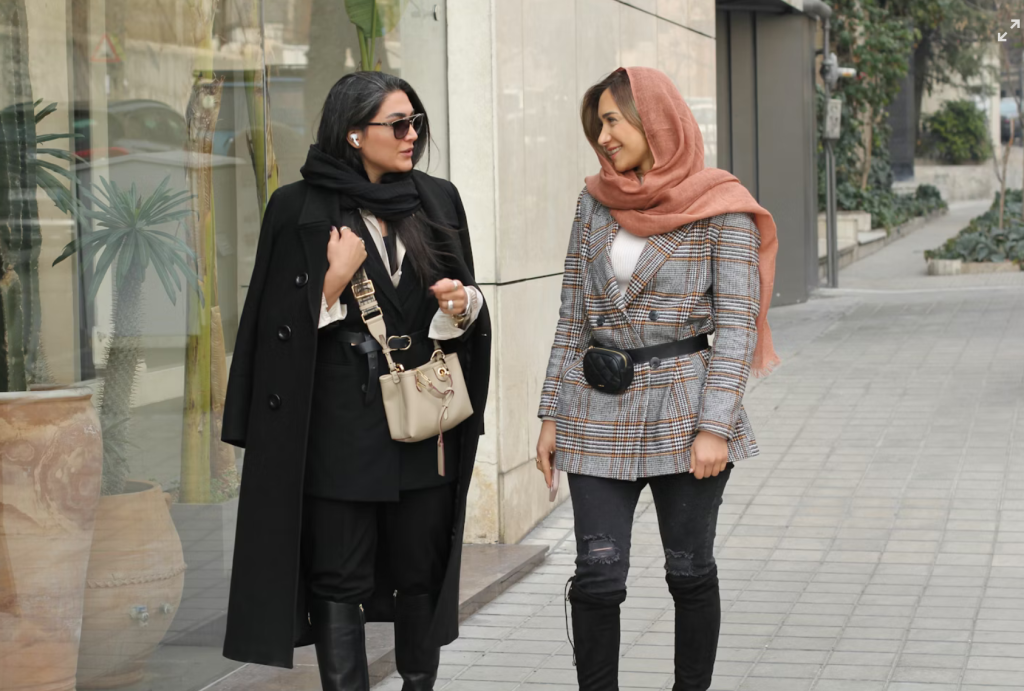
Both women and men are expected to avoid excessively revealing clothing in public. Signs posted at many business entrances across the region will politely remind visitors to dress modestly, and usually it will explicitly state to cover knees and shoulders for both genders.
This means no strapless tops, no crop tops or midriff on display, and no ultra-short shorts or miniskirts in family-friendly public areas. For women, low-cut necklines or transparent fabrics that show cleavage or underwear are also a no.
For men, going shirtless or wearing vest tops in public (outside of beach/pool settings) is considered inappropriate. Instead, men should opt for t-shirts or shirts with sleeves, and shorts should come to at least the knee.
Mosques
Inside any GCC mosque you should dress very conservatively, long, loose trousers or skirts, high necklines, covered shoulders, and (for women) a headscarf. The mosque staff or security may deny entry to anyone not dressed appropriately, and wearing improper attire is considered disrespectful. This means:
- Covering your arms and legs.
- Removing your shoes. Shoes must be removed before entering any mosque. Plan footwear that’s easy to take off. Also, keep socks handy if you prefer not to be barefoot.
- Covering hair with a scarf. Female visitors are expected to cover their hair with a headscarf (hijab) before entering a mosque. If you don’t have one, most major mosques that welcome tourists will provide or rent appropriate coverings. For example, at Bahrain’s Al Fateh Grand Mosque, women must be completely covered in loose abaya robes with a headscarf (these can be borrowed on-site if needed), and men are required to wear long trousers and shirts that reach the elbow.
Pro tip: For female travellers, carry a light pashmina or shawl in case a quick head cover or extra layer is needed.
Traditional clothing in mosques
Traditional local attire is not required for foreigners, but dressing as modestly as locals will show respect. In Saudi Arabia it’s no longer legally mandatory for women tourists to wear the black abaya robe in public, except at religious sites where full modest dress is still expected. However, even though it’s not enforced by law, local people are not accustomed to seeing a lot of skin in mosques, so always aim to cover up to avoid offence.
Malls and public spaces

In everyday public settings like shopping malls, markets (souks), restaurants, and city streets, GCC countries expect a decent standard of dress from everyone. The exact expectations can vary by country (and even by city), but a good rule of thumb across the Gulf is: cover your shoulders and knees in public. Below are the guidelines and nuances by region:
UAE and Bahrain
The UAE (particularly Dubai) and Bahrain are generally the most relaxed in terms of dress code. You will often see people in Western dress and sometimes pushing the limits (e.g. sundresses, shorts, off-shoulder tops) especially in tourist zones. Officially, though, even Dubai asks that shoulders and knees be covered in public places. Though enforcement is not as strict in Dubai, Abu Dhabi and Bahrain are slightly more conservative, and Sharjah is even more strict.
Qatar and Oman
These countries fall in the middle. They are modernising but are still quite traditional. Qatar has a campaign and laws about public decency. The official tourism guidance in Qatar states that men and women “are expected to show respect for the local culture by avoiding excessively revealing clothing in public,” recommending that shoulders and knees be covered.
During events like the 2022 World Cup and especially during Ramadan, Qatar strictly enforces conservative dress in public.
Oman is known for its polite and traditional society. The expectation is to dress “considerately” rather than extremely conservatively. If you visit smaller towns or rural areas in Oman, consider long sleeves and full-length trousers for both genders because the culture there is more traditional than in places like Muscat.
Kuwait and Saudi Arabia
Traditionally the most conservative. Kuwait has no official legal dress code for foreigners, but social norms are quite strict. You won’t see locals wearing revealing clothing and Kuwaiti women almost always wear long sleeves and long trousers and skirts with abaya and hijab. Men wear trousers (shorts are rare for local men) and as a tourist you should definitely cover your shoulders and knees at a minimum as locals are more likely to find shorter attire disrespectful.
Saudi Arabia, being an explicitly Islamic Kingdom, has had strict legal dress requirements until recently. In 2019, Saudi introduced public decency regulations that relaxed the rules for foreigners a bit, but modest dress is still legally and culturally required.
Tourists in Saudi (both men and women) should wear loose-fitting clothes that cover the shoulders and knees, as well as preferably covering the elbows and ankles in public. Women are no longer required by law to wear the abaya robe or a headscarf, but to be respectful it’s best if female visitors still wear long trousers/skirts and at least short-to-three-quarter-length-sleeves. Saudi Arabia’s public decency law can still impose fines for “improper dress”.
Beach and swimwear etiquette
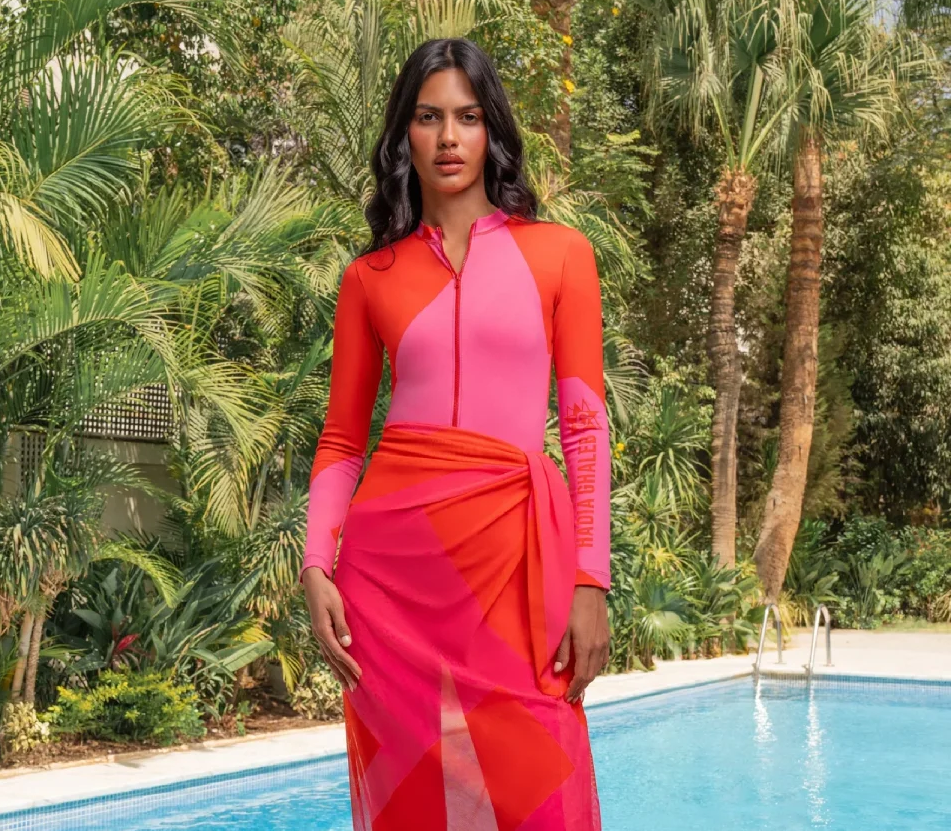
Beach attire is one area where the rules relax slightly, but it’s also where context matters. Tourists can enjoy the various beaches and pools in the GCC, but the key is to wear swimwear only in appropriate places and to stick to each country’s norms regarding how revealing that swimwear can be.
- Nudity and topless sunbathing are banned across the entire GCC. Beyond that, acceptable beachwear ranges from bikinis in some areas to needing a t-shirt over your swimsuit in others.
- Cover outside the water. When you are not actively swimming or sunbathing within the designated beach or pool area, you should cover up. That means if you leave the pool to walk through the hotel lobby, or when you’re grabbing lunch at a beach cafe, throw on a cover-up, shirt, or wrap.
Hotel beaches and pools
In most GCC countries, private hotel beaches, resort pools, and beach clubs catering to tourists allow typical “Western” swimwear. One-piece swimsuits and bikinis are generally allowed in the UAE, Bahrain, Qatar, and Oman. Saudi Arabia has recently opened some private Red Sea resorts where women in bikinis are permitted on the beach.
Kuwait also has a few private beaches and pools (often connected to hotels or clubs) where Western swimwear is tolerated. Men can wear regular swim trunks or board shorts in resort settings. Speedo-style briefs are less common but technically not illegal. Many local men will opt for swim shorts for modesty.
Public beaches and pools
On public beaches that are accessible to everyone, the dress expectations become more conservative and varying by country.
- Dubai and Abu Dhabi’s main public beaches (like Jumeirah Beach or Saadiyat Beach), bikinis and one-pieces are commonly worn by tourists and generally accepted.
- However, more conservative Emirates (Sharjah, Ajman, etc.) as well as Bahrain have stricter rules. For example, Sharjah’s public beaches officially discourage women from wearing two-piece swimsuits. Men are fine with swim shorts, but should not wear speedos on public family beaches.
- Qatar’s public beach etiquette sees a range from local ladies fully covered in burkinis to some tourists in two-pieces. The Qatari guidance suggests “erring on the side of caution” and wearing a one-piece or covering a bikini with a flowing sun shirt to be respectful. Men should wear regular swim shorts and never be shirtless outside the immediate beach or pool area.
- Oman’s public beaches and wadis are quite conservative in public recreational areas. Omani women typically swim fully clothed or in burkinis, and Omani men often swim in t-shirts and long shorts. In the wadis (like Wadi Shab): women are expected to swim in shorts or leggings and a shirt rather than just a bathing suit and tourist police in Oman have been known to enforce these rules.
- In Kuwait most locals would consider it inappropriate to wear a swimsuit and many expats and locals in Kuwait simply don’t sunbathe in public beaches at all. Instead, they use private beach clubs or hotel pools instead. If you do go to a public beach in Kuwait women should strongly consider wearing at least knee-length shorts and a t-shirt over their swimsuit for modesty.
- Until recently, Saudi Arabia had very limited mixed-gender beach opportunities except private expat compounds. Now, with new developments, there are a few private resorts where Western swimwear is allowed for men and women. If you’re at one of these authorised resort beaches, you may wear a normal swimsuit or bikini while swimming, However, public beaches in Saudi traditionally have not seen women in swimsuits at all. Local women don’t swim in public with men present, and if they do, they wear abayas or clothes. Men can swim at public beaches but typically wear swim shorts and a t-shirt. The safest approach in Saudi is to swim only at locations explicitly designated for mixed-gender swimming (like private hotel beaches or expat facilities).
Special events like Ramadan
During the holy month of Ramadan, all GCC countries tend to enforce conservative behaviour and dress more strictly. Tourists visiting in Ramadan should be extra cautious – covering shoulders and knees is the absolute minimum, and ideally wear long sleeves and full-length trousers in public to show respect during this sacred time. Many malls and public venues will post reminders about decorum in Ramadan. It’s also part of the law in some places that indecent dress during Ramadan (when people are fasting and extra sensitive to propriety) can lead to complaints or penalties. So if you’re in the Gulf during that month, plan to pack more modest outfits than you might otherwise.
Overall, whether you’re visiting a mosque, shopping in a mall, or lounging by the Persian Gulf respect and awareness are your best guides. The GCC nations are proud of their culture and hospitality. They don’t expect visitors to dress exactly like locals, but they do appreciate a show of respect through modest attire. Pack versatile clothing that you can layer, choose lightweight fabrics that cover skin, and you’ll be fine.