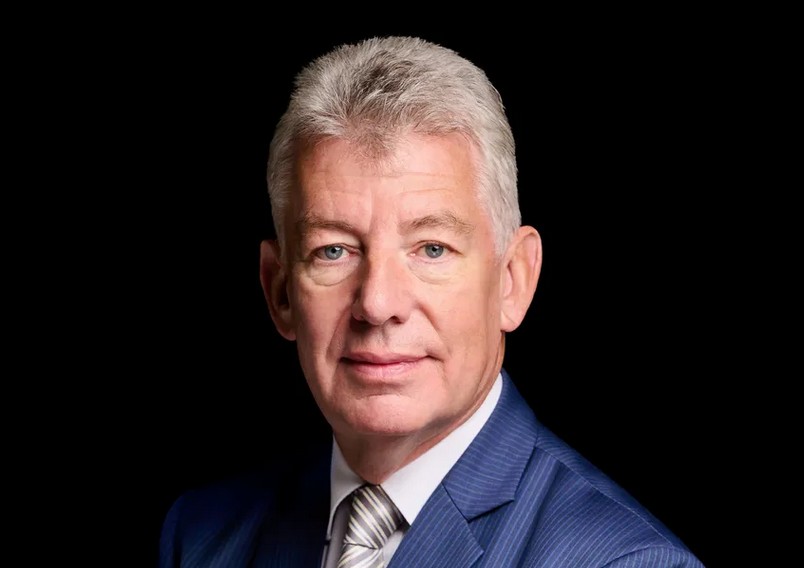
In a move that signals a significant shift in the geopolitical gravity of aviation sustainability, Paul Griffiths, the CEO of Dubai Airports, has been appointed to spearhead the global charge for Sustainable Aviation Fuel (SAF).
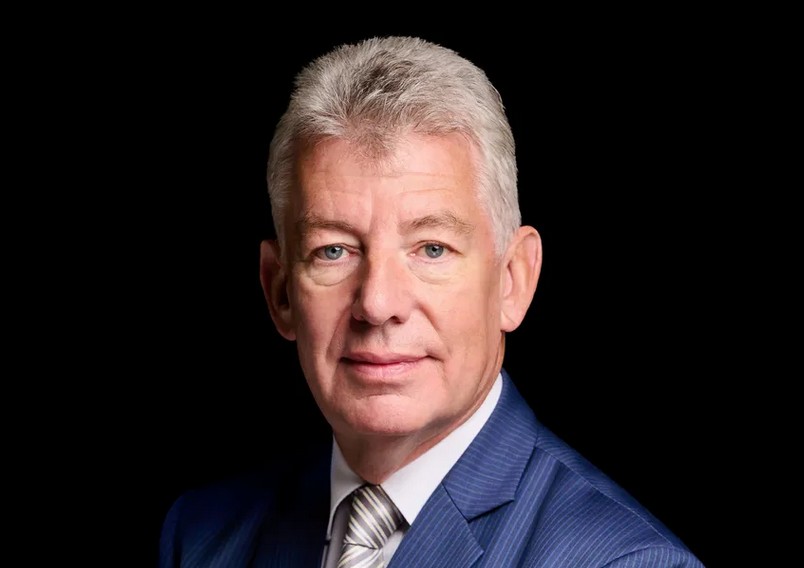
The appointment comes directly from the Sustainable Markets Initiative (SMI), founded by His Majesty King Charles III, naming Griffiths as the ‘CEO Champion’ of its SAF Pathfinder Initiative.
For aviation insiders, this is not merely a personnel announcement; it is a strategic signal. By placing the head of the world’s busiest international airport at the forefront of the SAF transition, the industry is acknowledging that the path to Net Zero cannot simply be regulated from Brussels or Washington—it must be operationalised at the major hubs that connect the world.
The 1% problem
The context for this appointment is stark. According to the International Air Transport Association (IATA), the aviation industry has a “license to grow” only if it can decarbonise. The sector has committed to Net Zero by 2050, a target that hinges almost entirely on SAF, which can reduce lifecycle carbon emissions by up to 80%.
However, the current numbers read like a crisis of supply. IATA’s latest data reveals that in 2024, SAF production accounted for less than 1% of global jet fuel demand. To meet the 2050 goals, production capacity needs to scale exponentially—from a few hundred million litres today to nearly 450 billion litres by mid-century.
Griffiths, known for his pragmatic and often candid leadership style, acknowledged the weight of the task.
“Sustainable Aviation Fuel is one of the most important levers we have to decarbonise flight,” he stated upon his appointment. “I’m committed to accelerating its availability and adoption across the sector.”
A regional ripple effect
While this is a global mandate, the regional implications for the Middle East are profound. The Gulf Cooperation Council (GCC) states have spent decades successfully diversifying their economies away from oil, yet they remain the hydrocarbons capital of the world.
Griffiths’ new role could accelerate the region’s pivot toward becoming a **green energy powerhouse**. The UAE, Saudi Arabia, and Qatar possess the unique triad required to lead the SAF revolution:
- Capital availability to fund high-risk, high-reward infrastructure.
- Abundant solar resources necessary for producing Power-to-Liquid (PtL) fuels—the “holy grail” of SAF.
- Geography, placing them within an eight-hour flight of two-thirds of the world’s population.
If Dubai effectively becomes a testbed for SAF adoption, integrating it into the fuelling hydrants of DXB and Al Maktoum International (DWC), it sets a precedent for regional peers like Doha’s Hamad International and Riyadh’s upcoming King Salman International Airport to follow suit. We are likely to see a “race to the top” in regional sustainability credentials.
The impact
For the travel and hospitality, this shift brings both opportunity and cost.
1. The cost of conscience
SAF is currently **2 to 5 times more expensive** than conventional jet kerosene. As regulatory mandates kick in (such as the EU’s ReFuelEU), airlines will face a choice: absorb the cost or pass it on.
For the tourism industry, this signals the end of the “ultra-cheap flight” era. Decision-makers must prepare for a landscape where air travel becomes a premium product, priced to reflect its environmental impact.
2. Corporate responsibility
Corporate travel managers are increasingly mandated to report Scope 3 emissions. An airport or airline that can demonstrably prove a higher mix of SAF usage will gain a competitive advantage in securing lucrative corporate contracts.
3. The ‘green’ traveller
While scepticism remains about “greenwashing,” data suggests a growing segment of luxury and business travellers are willing to pay a premium for verified sustainable travel options. Griffiths’ leadership of the Pathfinder Initiative aims to create a harmonised global framework, potentially making “book-and-claim” SAF systems more transparent and trustworthy for the end consumer.
The runway ahead
The Sustainable Markets Initiative, under Griffiths’ stewardship, will focus on mobilising investment and, crucially, advocating for harmonised global policies. The current patchwork of mandates (heavy in Europe, incentive-based in the US, nascent elsewhere) creates market distortion.
As Jennifer Jordan-Saifi, CEO of the SMI, noted, SAF is viewed as a “powerful catalyst… for driving the global expansion of sustainable technologies.”
For Dubai, this is a natural evolution. Under the OneDXB Sustainability Alliance, the airport has already achieved Level 4 ‘Transformation’ accreditation from ACI, deploying biodiesel fleets and solar arrays. But moving from ground operations to the fuel in the wing is the final, most difficult frontier.
Essentially, the appointment of Paul Griffiths means the aviation industry is shifting from merely discussing the possibility of SAF to now trying to solve the probability of its supply.