What happens when you bring together world-class Australian tourism expertise and one of the fastest-growing travel regions on the planet? You get a powerhouse mix of creativity, authenticity, ambition and fresh thinking — the perfect recipe for the Middle East’s next great tourism leap.
Australia has long been celebrated for its hospitality, marketing ingenuity, and wanderlust-driven culture. Now, as major destinations such as Saudi Arabia, the UAE and the wider region push forward with bold tourism strategies, Australian leaders are taking centre stage, bringing with them lessons from the outback, the coast, the cities, and decades of globally recognised destination-building.
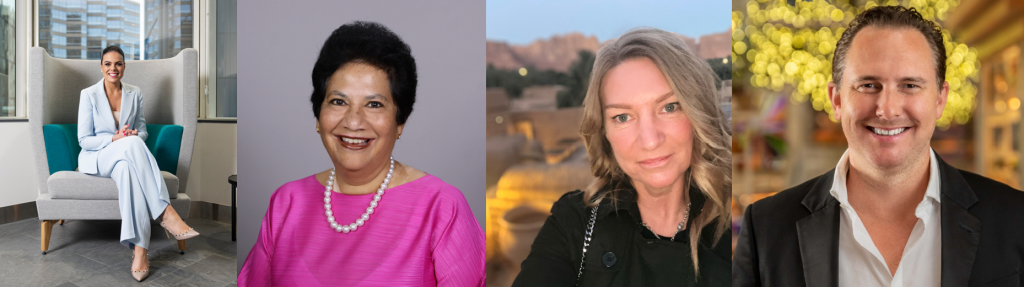
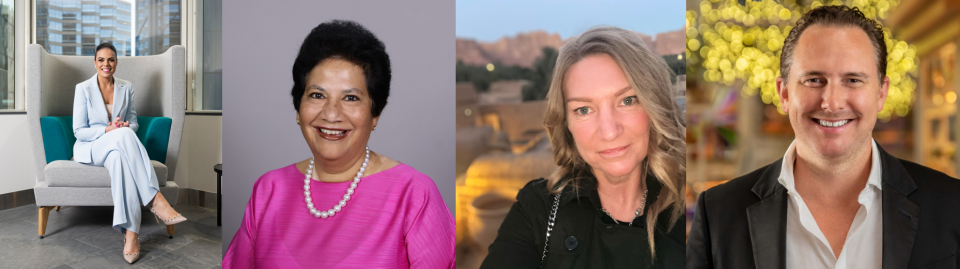
In this special feature, four influential Australians, Carolyn Turnbull (CEO, Nammos Hotels and Resorts), Melanie de Souza (Executive Director Destination Marketing, Royal Commission for AlUla), along with Zoe Shurgold and Stephen Howard (who both hold senior positions at the Royal Commission for AlUla as well), share how their homegrown expertise is helping to power the Middle East’s tourism renaissance.
Australia is well-known for its world-class tourism and hospitality culture. How are your experiences back home shaping your approach in your role here?
Carolyn Turnbull: Australia gave me incredible grounding and ambition — this strong foundation, combined with my extensive global experience, allows me to guide Nammos’ pipeline of ultra-luxury properties to be commercially strong yet personal, authentic, and reflective of their destination.
Melanie de Souza: Building a marketing team with qualified expertise in Brand, Global Distribution, PR, Customer Insights and Data, Digital and E-commerce was a key early priority. My experience in Australia, where Destination Marketing organisations are mature and globally competitive, taught me the importance of successfully leveraging partnership opportunities. This helped to shape my approach in Saudi Arabia, where I have been able to elevate our relationship with the Saudi Tourism Authority while building a distinct purposeful identity for AlUla as a sub-brand premised on world-class heritage and culture. Strong foundations in air connectivity, a focused approach to travel trade partnerships and a prolific PR and social media outreach have been key strategic levers that I also applied in my previous role and successfully adapted to AlUla.
Zoe Shurgold: Having worked for Tourism Australia, one of the world’s most successful destination marketing companies, as well as Visit Victoria, Visit London and Visit England, I have had the opportunity to bring insights on what works and what doesn’t to help shape AlUla’s PR strategy in a destination where the tourism eco-system had to built from the ground up.
Stephen Howard: I’ve lived in every eastern state of Australia, including Tasmania, and seen how tourism can shape communities. Working with Tourism Australia alongside leaders like John O’Sullivan and the late Lisa Ronson taught me the power of bold, creative storytelling with campaigns like Dundee and Restaurant Australia inspiring audiences worldwide. I bring that same spirit to AlUla: pushing boundaries, but always rooted in authenticity, community and sense of place.
What excites you most about developments in the Middle East’s tourism sector, and how do you envision making an impact?
Carolyn Turnbull: The Middle East is rewriting the playbook for global tourism. At Nammos, I’m thrilled to contribute to this dynamic growth by setting new benchmarks for Mediterranean-inspired luxury, from AMAALA to Dubai and Abu Dhabi, and upcoming projects across the region, creating destinations that people will travel the world to experience.
Melanie de Souza: What excites me most is the ambitious vision and the carefully considered master plans that underpin the destination development agenda for places like AlUla. The ability to access world-class expertise across disciplines and align resources behind a clear purposeful Destination vision facilitates effective Brand building and storytelling. KSA in particular is a relatively new story having only embraced global tourism six years ago as part of Vision 2030. The depth of heritage of global significance, the outstanding natural environment and compelling landscapes and the world-class events calendars being curated are compelling. The opportunity to shape AlUla’s positioning from scratch and build a hitherto unknown Brand in global markets was exciting indeed.
Zoe Shurgold: Obviously AlUla is the most exciting in terms of the pure untouched landscape formed over three distinct geological eras creating a landscape that totally transforms and wows anyone who is lucky enough to visit. Unveiling stories of ancient civilisations, digging deep into the culture and the archaeological work – it’s all my passions coming together. It is also hard not to be impressed with the incredible resorts going up around other parts of the region, setting new benchmarks for hospitality. For AlUla we’ve already made an impact. From a destination not known to most travellers, to five years later having nearly 60% brand awareness. From a PR perspective that’s achieved from having global media networks built over years of experience and good PR strategy.
Stephen Howard: It’s inspirational to see this region creating an entirely new industry to diversify its future. In Saudi, tourism is being built with soul and heart, aligned with culture, creativity, history, and environment. That resonates deeply with me because in AlUla we have the opportunity to set a global benchmark for sustainable luxury tourism, where every step forward protects heritage, enriches culture, and creates meaningful experiences for visitors.
Given the ambitious targets across the region, which lessons from Australia’s tourism evolution can fuel this growth?
Carolyn Turnbull: From Australia, I’ve learned the value of authentic storytelling, strategic partnerships, and long-term planning — principles we apply to ensure each Nammos property will deliver lasting brand value and impactful guest experiences.
Melanie de Souza: Key lessons from my work in Australia include the importance of targets premised on visitor expenditure rather than sheer tourism numbers. This aligns well with our focus on sustainability and the quality of the customer experience, learning from the mistakes made by destinations afflicted by over-tourism. In line with today’s customers who demand authenticity and cultural immersion, we believe across our visitor journeys we need to ensure the unique Saudi culture and the warm hospitality of locals is front and centre. Finally, partnerships – both on the demand and supply side – and consistency in application of a differentiated Destination Brand are critical to success in what is an increasingly competitive market.
Zoe Shurgold: Australia built FOMO, we continually top the most bucket list destination of the world lists, in AlUla, we also have FOMO. Everyone I talk to now wants to go there. The tricky part for both destinations is the conversion – tricky for very different reasons. The lessons I think we have taken from Australia is to be true to our promise and our purpose – it’s not an if you build it they will come – it’s more like if you stick to your core principles of place-making and marketing that is authentic, community-driven, sustainable – then, they will come.
Stephen Howard: Australia showed that global competitiveness comes from knowing your story and telling it with creativity and consistency. Campaigns like Dundee and Restaurant Australia unlocked new audiences while building pride at home. In AlUla and across the Middle East, the same principles apply, ‘celebrate what is distinctive’ – whether heritage, nature, or culture – then share it with the world through powerful storytelling, partnerships, and visitor experiences that surprise and inspire.
What strengths or perspectives do Australians bring that make them a great fit for leadership roles in this dynamic tourism market?
Carolyn Turnbull: Australians bring openness, pragmatism, and a global outlook — qualities that help navigate complex, multicultural projects across diverse jurisdictions. We also lead with collaboration, adapt quickly to evolving markets, and bring a creative, solutions-focused approach that drives ambitious tourism initiatives forward.
Melanie de Souza: I don’t believe leadership is particularly defined by nationality, but Australians do bring qualities that suit this market well. Some of the successful Australians I know have a great work ethic, embrace multicultural environments and possess great technical expertise as well as genuine leadership qualities. I have had the pleasure of working with many terrific Aussies at the top echelons of the tourism and hospitality industry at home and indeed in far-flung regions including the Middle East.
Zoe Shurgold: Australians are everywhere, we love to leave our beautiful piece of paradise and explore other parts of the earth, with that comes an open mind and people that respect cultures and love to immerse – and to not take things too seriously. We are also known pretty much anywhere we end up as hard workers with good ethics. I think all of those things make for good leadership especially in tourism.
Stephen Howard: Australians bring a can-do attitude, a collaborative spirit, and experience from one of the most competitive tourism markets in the world. We balance creativity with pragmatism, and we’re comfortable working across cultures. Those qualities, combined with our instinct for authentic hospitality, are well-suited to helping shape destinations like AlUla into world leaders in cultural and sustainable luxury tourism.
What are you looking forward to the most in your move or role here? Or what have you been enjoying the most since your move here?
Carolyn Turnbull: I’m excited to bring Nammos’ vision to life — creating destinations that are glamorous, soulful, and unforgettable. For me, it’s about blending luxury hospitality, entertainment, and culture in a way that celebrates people, place, and the unmistakable Nammos spirit, both across the Middle East and beyond.
Melanie de Souza: What I’ve enjoyed most is immersing myself in a different culture and dispelling many of the misconceptions the world holds about this region. What I’ve discovered is that Saudi Arabia is a dynamic nation, driven by its youth, with newfound freedoms for women which they are embracing wholeheartedly. Saudis are warm, friendly and proud to showcase their homeland. There’s something truly remarkable about being here at a time of profound economic and social change. I also feel rewarded from being able to mentor and learn from many of my Saudi colleagues and feel sure they will go on to enjoying meaningful and successful careers. And the local fare – Kabsa in particular – is yum indeed!
Stephen Howard: What’s happening in Saudi right now is something we will not see again in our lifetime – the creation of an entirely new tourism landscape with purpose, ambition, and heart. For me, it’s about contributing to this once-in-a-lifetime opportunity, helping AlUla evolve into one of the world’s most remarkable destinations. What excites me most is doing this with soul, honouring its history, protecting its environment, and working with the community to share AlUla with the world. Competing on the global stage matters, but the true impact lies in building a destination that feels timeless, authentic, and meaningful. So, most of all, I’m looking forward to going on this journey with AlUla and seeing it continue to evolve.
From luxury hotel development to destination storytelling, from brand building to cultural preservation, Australian leaders are helping to shape the Middle East’s tourism sector with creativity, authenticity and deep strategic insight. Their shared approach can be summed up as follows:
- Tell powerful stories
- Stay true to place and community
- Build with purpose
- Create unforgettable experiences
With this forward-thinking mindset, coupled with the region’s bold vision and future-focused plans, the region’s tourism future is more than bright, it’s positively electrifying
Also read: Selling the Middle East: A travel agent’s guide to tackling challenges and boosting bookings