
The Middle East aviation sector is in the midst of a meteoric rise that’s reshaping global air travel, and the latest figures from IATA affirm just how dramatic this boom has become. In 2025, global airline demand climbed 5.3% year-on-year, with international travel surging 7.1% and load factors hitting record highs, all signs that flying is evolving into an era of unprecedented connectivity and resilience.
But nowhere is this story more compelling than in the Middle East, where strategic geographic positioning, massive airport investments, rapid airline growth and aggressive route expansion are not just driving regional travel figures, they’re setting new global benchmarks.
Middle East airlines outpacing the world
IATA’s data for 2025 shows Middle Eastern carriers achieved a 6.7% increase in international passenger traffic, with capacity up 5.8% and a load factor climbing 0.7 percentage points to 81.6%, above many other global regions. December 2025 finished strong, with demand up 9.5% YoY, underscoring the exceptional momentum.
This performance stands out in an aviation landscape where Asia-Pacific carriers led overall growth, but the Middle East remains one of the most dynamic and profitable regions, with airlines forecast to post the highest net profit margins globally in 2026, driven by lucrative long-haul networks and cost-efficient operations.
Huge passenger growth and connectivity expansion
Across the Middle East, airports and airlines are consistently breaking their own records. Some key figures include:
- Across the UAE, airports collectively welcomed 75.4 million passengers in the first half of 2025, up 5% year-on-year, driven by airlines launching services to 15 new destinations spanning Europe, Asia, Africa and the wider Middle East.
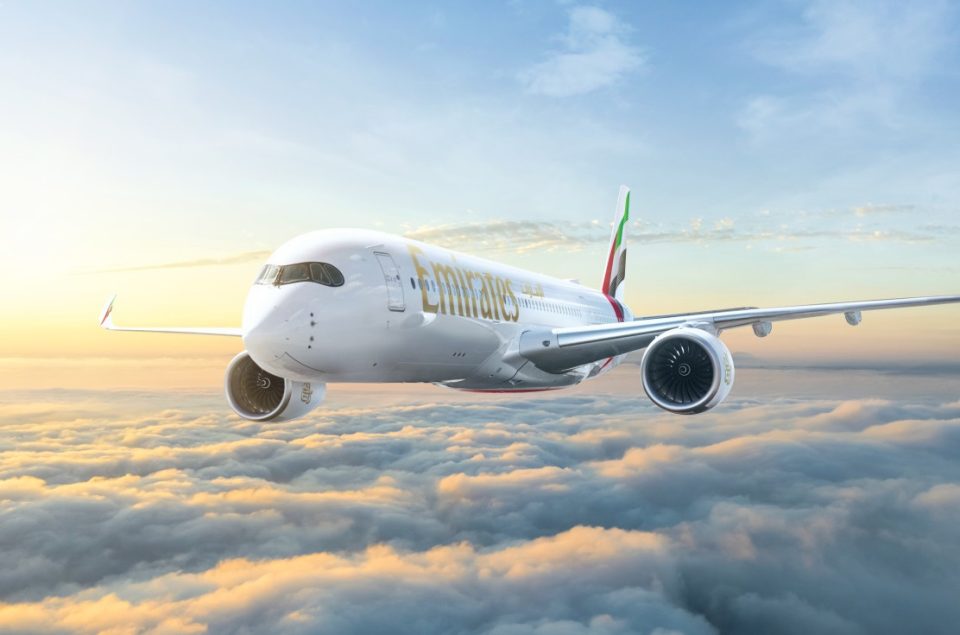
- Dubai International Airport (DXB) continues to dominate as one of the world’s busiest international gateways, handling a record 46 million passengers in the first half of 2025, with projections pointing to 96 million by year-end and 100 million+ in 2026 as demand keeps climbing. And Emirates flew high in 2025, carrying 55.6 million passengers, operating nearly 180,580 flights, and ordering 73 new aircraft as it marked its 40th anniversary.
- Abu Dhabi Airports recorded 33 million passengers in 2025, the highest in the emirate’s history, with Zayed International (AUH) now the fastest-growing mega airport in the EMEA region. Meanwhile, Etihad Airways delivered its strongest year ever, carrying a record 22.4 million passengers in 2025, up 21% year-on-year, with load factors reaching 88.3% as it expanded its network to more than 80 destinations.
- Saudi Arabia’s aviation market is also scaling rapidly, with passenger volumes exceeding 140 million in 2025 and international destinations rising to 176, supported by new carriers like Riyadh Air and major airport investment programmes.
- Qatar’s aviation sector saw a 3% rise in passenger traffic, with 54.3 million travellers passing through the country in 2025, according to the Qatar Civil Aviation Authority (QCAA).
- Turkish Airlines carried a record 92.6 million passengers in 2025, an 8.8% increase from 2024, with a strong growth in international-to-international transfer passengers and a total load factor of 83.2%.
- Passenger numbers for Royal Jordanian soared, hitting 4.4 million in 2025, an 18% jump from 3.7 million the year before.
Moreover, industry projections indicate the regional market will carry around 240 million passengers in 2026, with sustained annual growth forecast to outpace the global average.
What’s driving this surge?
1. Geography meets strategy
The Middle East sits at the crossroads of major travel corridors connecting Asia, Europe and Africa, giving hub carriers like Emirates, Qatar Airways, Etihad and Saudia a unique edge in routing and network optimisation.
2. Airport mega-hubs and infrastructure investment
Massive airport expansions are underway. Riyadh’s King Salman International is projected to reach 120 million passengers capacity by 2030, while Dubai World Central targets 260 million, figures that dwarf many global hubs.
3. Network growth and airline ambition
Regional airlines are aggressively adding new destinations and frequencies. Legacy carriers rank among the world’s largest by capacity, and low-cost carriers like flynas and flydubai are rapidly increasing seat capacity and route options, transforming market dynamics.
4. Unified travel and policy reforms
Plans for unified GCC travel frameworks (akin to a Schengen-style visa) could significantly boost intra-regional travel demand and make multi-destination trips easier for global travellers.

What this means for the industry and travellers
1. Unmatched connectivity opportunities
For the travel trade, the Middle East’s expanding network means unparalleled access to emerging markets in Africa, South Asia and beyond. New routes and strategic hubs make routing easier and more efficient for passengers worldwide.
2. Fare and capacity optimisation
High demand paired with record load factors signals airlines are operating lean and efficient services. As capacity grows, and new aircraft join regional fleets, travellers can expect more choices, better pricing options and enhanced global access.
3. A new era of global hubs
With projected passenger figures set to climb well beyond 300 million in the next decade and massive investments in airport infrastructure, the Middle East is effectively redefining global hub economics.
4. Tourism and trade wins
As aviation traffic climbs, the wider visitor economy is following. Airlines and airports are central to tourism strategies, particularly in Saudi Arabia and the UAE, supporting jobs, hospitality, retail and cargo sectors alike.
In essence, IATA’s 2025 data paints a clear picture: the MENA aviation sector is not merely back on track, it’s outpacing global peers, capturing new markets, and setting the pace for long-term industry expansion. With strategic investments, innovative policies and unrelenting demand, the region is positioned to be not just a regional powerhouse, but a central pillar of the world’s aviation future.