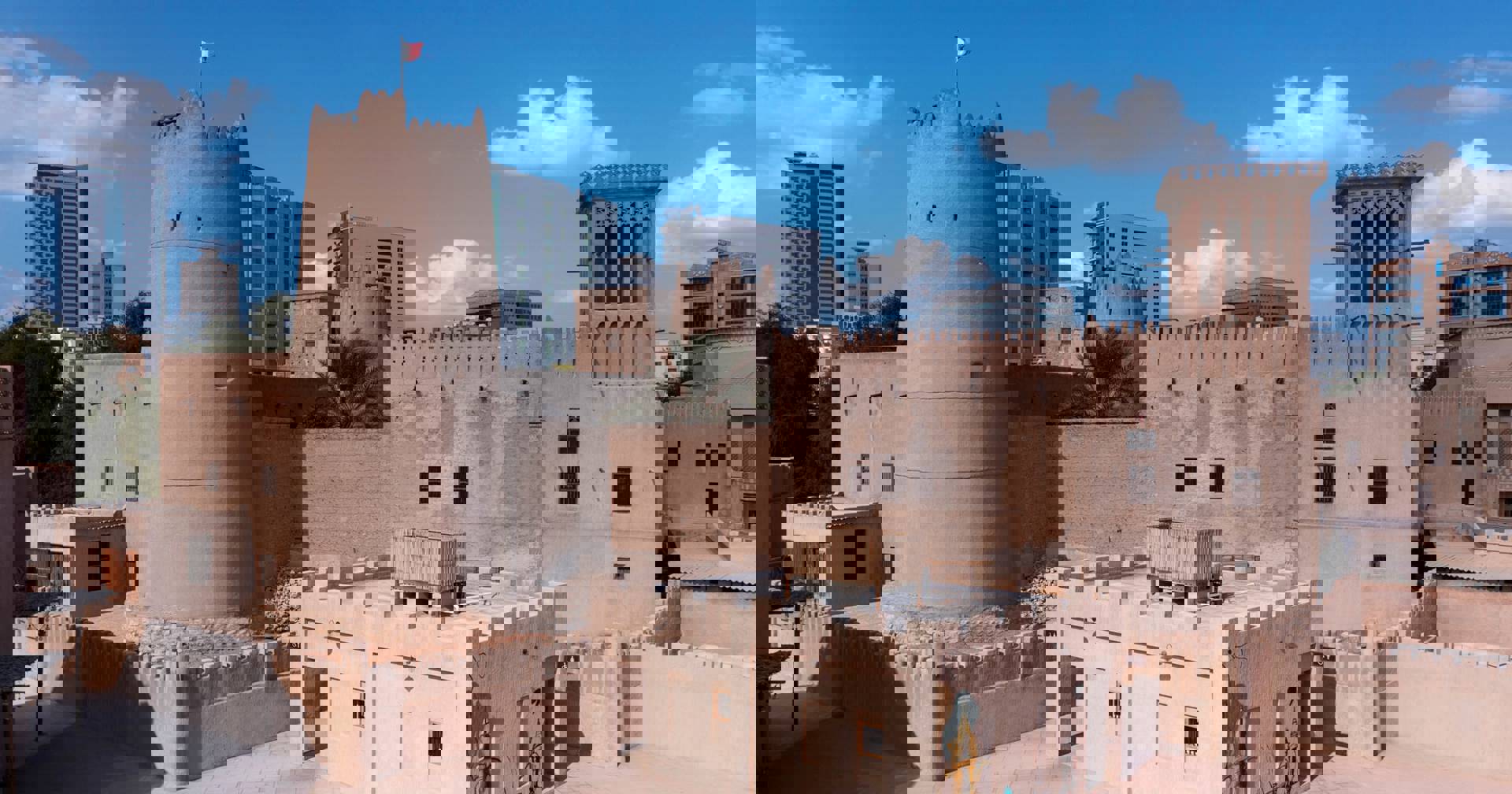
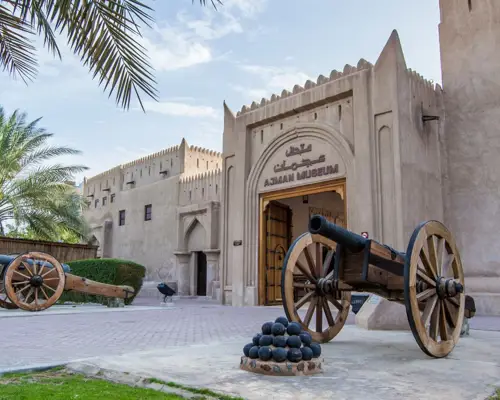

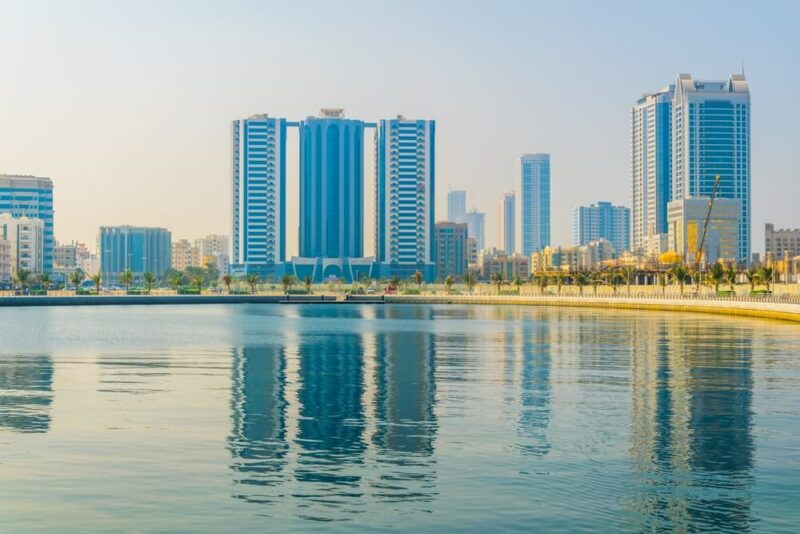
Ajman’s rich cultural heritage and customs are the result of thousands of years of varying influences. The emirate’s human history can be traced back to around 3000 BC following excavations at archaeological sites around the region. Discoveries from an ancient burial site found at Muwaihat in 1986 are housed at Ajman Museum and include distinctive clay pottery, the influence of which can still be seen in the style of pottery produced in modern-day Ajman.
The foundation of the modern emirate goes back to 1810, when the Al Nuaim tribe created a permanent settlement by the coast. They embarked on fishing and pearling, which were for centuries the main industries in the Gulf region. In fact, Ajman was the region’s biggest boat building centre, with many of the thousands of dhows that sailed through the Arabian Gulf constructed in its shipyards, using skills passed down through the generations.
Currency
The currency of Ajman is the Arab Emirates Dirham (AED). One dirham is divided into 100 fils. Notes come in denominations of 1,000, 500, 200, 100, 50, 20, 10 and 5, while coins are 1 AED, 50 fils, 25 fils, 10 fils and 5 fils. The dirham is pegged to the US dollar, and the exchange rate stands at US$1 = 3.67 AED.
Climate
Ajman has a subtropical, arid climate. Sunny blue skies and high temperatures can be expected most of the year as rainfall is infrequent. The most pleasant time to visit Ajman is from November to March, when average temperatures range between 30°C and 14°C, perfect for beach days and alfresco evenings. From June to September the weather is hot and humid, and summer temperatures can hit a sizzling 48°C and humidity well above 60 per cent. Many hotels drop their rates significantly during this time.
Ajman people
Ajman’s culture is steeped in exceptional hospitality. It is an inherited tradition borne out of the austere natural environment and the resulting emphasis on receiving and providing for guests.
While times may have changed and the complex codes of hospitality of the forefathers may no longer be practised, sincere generosity is still shown throughout everyday life in Ajman today. As a guest, you will be warmly welcomed and treated with respect.
More than our beaches, hotels or attractions, it is the genuine welcoming nature of our people that defines Ajman’s true sense of place.
Emirati Cuisine
The UAE’s fishing and trading past means that the local cuisine is based on fish, both freshly caught and preserved, along with rice and spices such as saffron and turmeric introduced by centuries-old trading partners such as Persia and India. Meats such as chicken and lamb also feature heavily. Dates are one of the most famed Middle Eastern delicacies. As one of the few crops that thrive naturally across the Arabian Peninsula, they have been cultivated in the area for around 5,000 years. Meanwhile, common dishes from the Levant include shawarma (lamb or chicken carved from a spit and served in a pita), falafel, hummus, and tabbouleh.
National Dress
In general, the local population wears traditional dress in public, which is a symbol of pride and identity.
For men, this is the dishdasha or kandura: a white full-length shirt dress, which is worn with a white or red checked headdress, known as a ghutrah. This is secured with a black cord known as an agal.
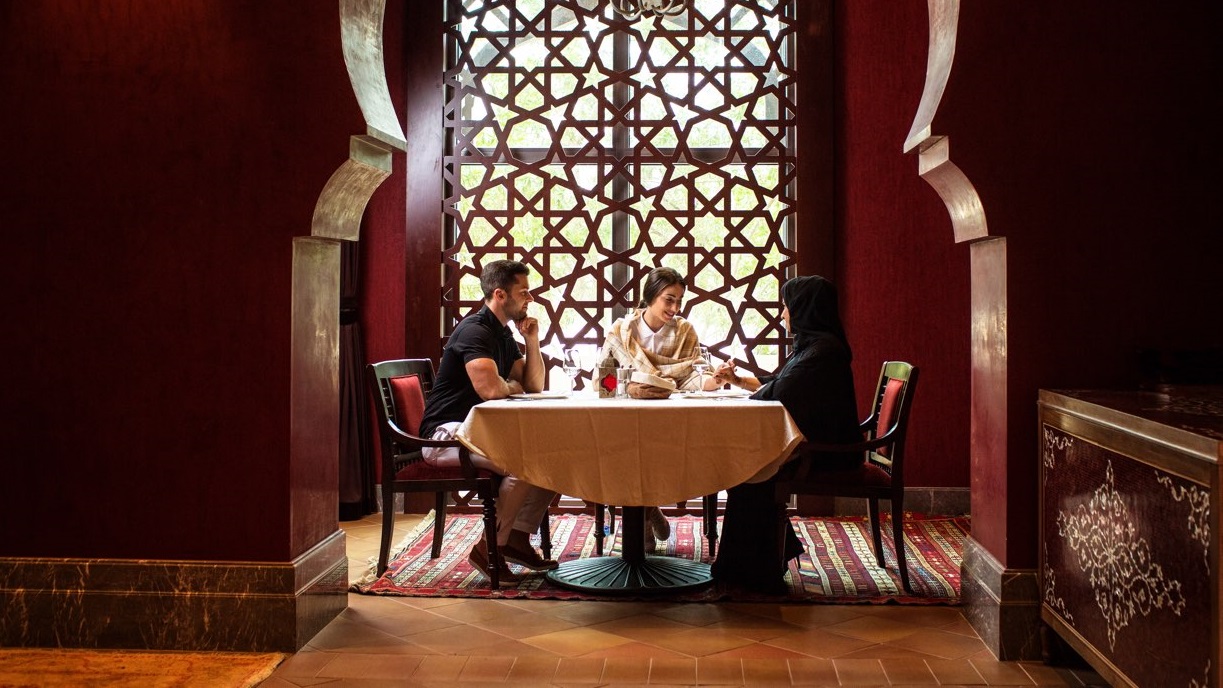
Women wear the black abaya; a long, loose robe that covers their normal clothes, plus a headscarf called a sheyla. Some women also wear a thin black veil covering their face.
Arabian Hospitality
Arab culture has been synonymous with warm and gracious hospitality for centuries and it remains at the heart of Ajman society today.
It stems from the struggle to survive in a harsh desert environment where the occasional traveller was the sole source of news, and where safety depended on the size and strength of one’s family, tribe and clan.
The desert-dwelling Bedouins welcomed strangers with Arabic coffee (gahwa), infused with cardamom and saffron, and accompanied with sweet and sticky dates, a tradition that is still practiced today.
Your host will read your body language – if you keep your espresso-sized cup (finjaan) extended, he will refill it. If you don’t want a top-up, give the cup a small shake and he’ll whisk your cup away.