
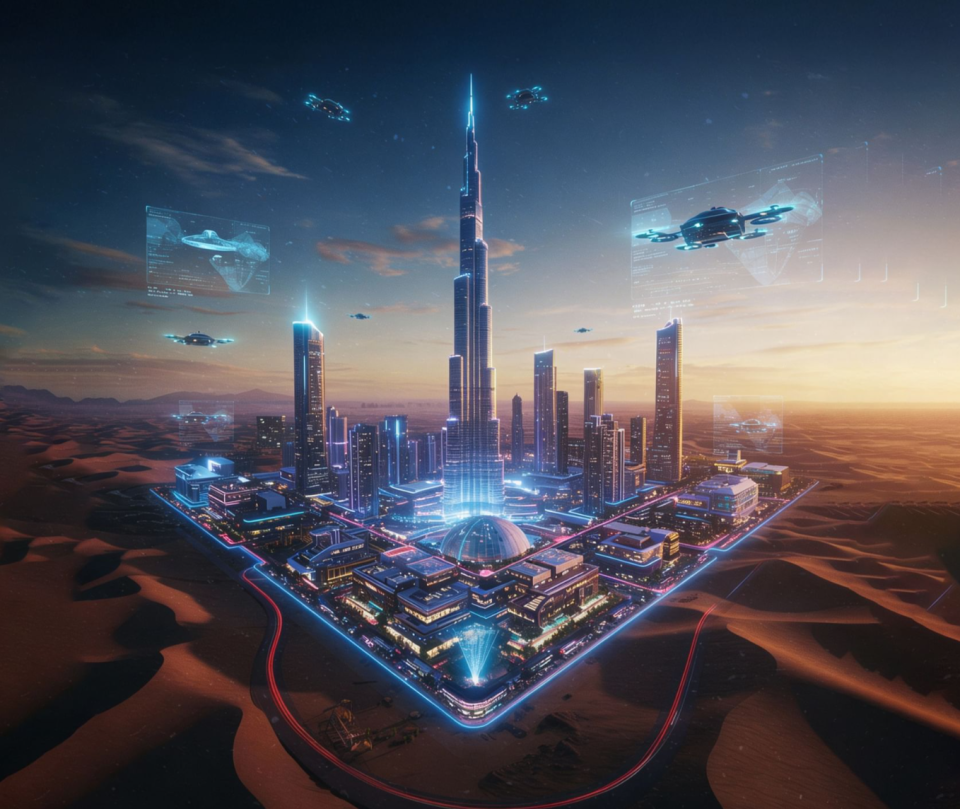
If the future of travel had a poster child, the UAE would be hogging the spotlights. Desiring more than spectacular skylines and record tourist arrivals, the nation is rapidly turning tech-fuelled tourism into an economic superpower, and it’s doing so with a wink and a swagger that even seasoned business brains cannot ignore.
Let’s be honest, you don’t become the global benchmark for digital transformation and tourism by accident. You do it with strategy, infrastructure, and a willingness to make the visitor experience smarter, faster and more fun than most places could muster.
Digital is the UAE’s passport to tourism greatness
The UAE’s National Tourism Strategy 2031 doesn’t pay lip service to digital transformation. It is crowned and placed on a throne at the heart of the plan. The goal? To grow tourism’s contribution to GDP to AED 450 billion (around USD 122.5B) and welcome 40 million visitors annually by 2031. That’s not pie-in-the-sky – it’s being backed by the aggressive expansion of digital infrastructure and services that make travel feel like a swipe, tap, and biometric blink.
From smart visas and biometric e-gates to AI-assisted itineraries, technology is no longer just supporting tourism. It is tourism in the UAE. Automated visa platforms and AI verification have visitors breezing through entry with minimal fuss, and hotels now offer contactless check-in, digital keys, and AI concierges. Every traditional friction is now frictionless at every touchpoint.
And while your typical traveller might think “gadgetry”, the numbers tell the economic story. International visitor spend is forecast to hit a record AED 228.5 billion (around USD 62.2B), up some 37 per cent on 2019 levels, with domestic tourism also growing robustly.
Read more: Three new techs coming to Dubai that travellers will love
Innovation: buzzword or competitive advantage?
Here’s where the UAE is clever. Rather than just building pretty digital tools, it’s tying them into a compact ecosystem that spans government agencies, travel firms, hospitality players, and tech startups. Dubai’s advanced 5G backbone, paperless government services and datasets flowing through shared platforms like the UAE Pass (used by more than 11 million people) create not just convenience, but competitive intelligence and scalability for tourism operators.
A tourism business can personalise a guest’s stay using real-time analytics, push bespoke offers via mobile apps, or optimise transport flows based on live data feeds. That’s real time deployment that’s raising the bar on experience and performance.
What’s working well now?
In terms of smart government services, the UAE’s national platforms integrate visa issuance, residency services, and identity verification into unified digital journeys that cut bureaucratic drag to near zero.
When it comes to mobility and connectivity, major airports and smart transport systems (metro, digital buses) keep both visitors and data moving seamlessly.
Contactless services from food and retail to attractions and accommodation, travellers are enjoying minimal queues and maximum control of their time and experiences.
And the rise of AI adoption in hospitality is improving services. With nearly 40 per cent of hotel operators now deploying chatbots and virtual assistants for 24/7 service, staff are able to elevate the human touch where it matters most, and these stats aren’t slowing down.
What’s still a work in progress?
There’s still a bit of a journey when it comes to true personalisation at scale. While AI can tailor recommendations and apply data from tourism, lifestyle, payments and mobility systems without frictions around privacy and opt-in consent, there still remains a delicate balancing act.
When it comes to SME integration, startups and smaller tourism operators love the big-tech sandbox, but uneven digital maturity can make it harder for them to compete unless support programs keep pace.
Then there is the sustainability versus screen time issue. Technology can help to reduce carbon footprints through optimised routing and smart grids, but digital infrastructure itself has an environmental cost that savvy planners must manage.
What’s real now, 2031 and beyond
In practice, visitors enjoy experiences that feel bespoke rather than mechanised. Imagine arriving at Dubai International Airport, identity verified before deboarding, luggage routed efficiently via smart tracking, and hotel check-in completed while you hail an autonomous taxi. That’s not the future. It’s already becoming the UAE standard.
Meanwhile, campaigns like World’s Coolest Winter lean into digital engagement to attract and retain visitors, designing not just price offers but interactive journeys from booking to post-trip sharing.
In the very near future, we can expect the lines between the physical and digital visitor experience to blur further. AI will increasingly guide tourists from planning to hindsight analytics that shape destination strategy. Governments are working on ethics and governance frameworks for AI to ensure privacy and trust – a must if data-driven personalisation is to scale responsibly.
And as the UAE positions itself not just as a smart travel hub but a digital society, travel brands and partner businesses that embrace open APIs, real-time data collaboration and experience platforms will see the biggest returns.
In other words, while big glossy campaigns and sky-high stats matter, the real story in the UAE is delightfully effortless and frictionless journeys that feel like a bespoke concierge whispering “this way, please”.