
With the fragile ceasefire continuing to hold, the Middle East’s travel industry is starting to find its footing again, and the UAE is emerging as a key driver of that recovery.
Across aviation, hotels, destinations and cruise, the past week has brought a clear shift from disruption to momentum that is cautiously optimistic. While the rebound is still currently uneven, the direction is getting more positive, with strong government coordination and a shared focus on rebuilding confidence across the sector, here’s the latest updates:
Aviation: Flights return, but the real story is what comes next
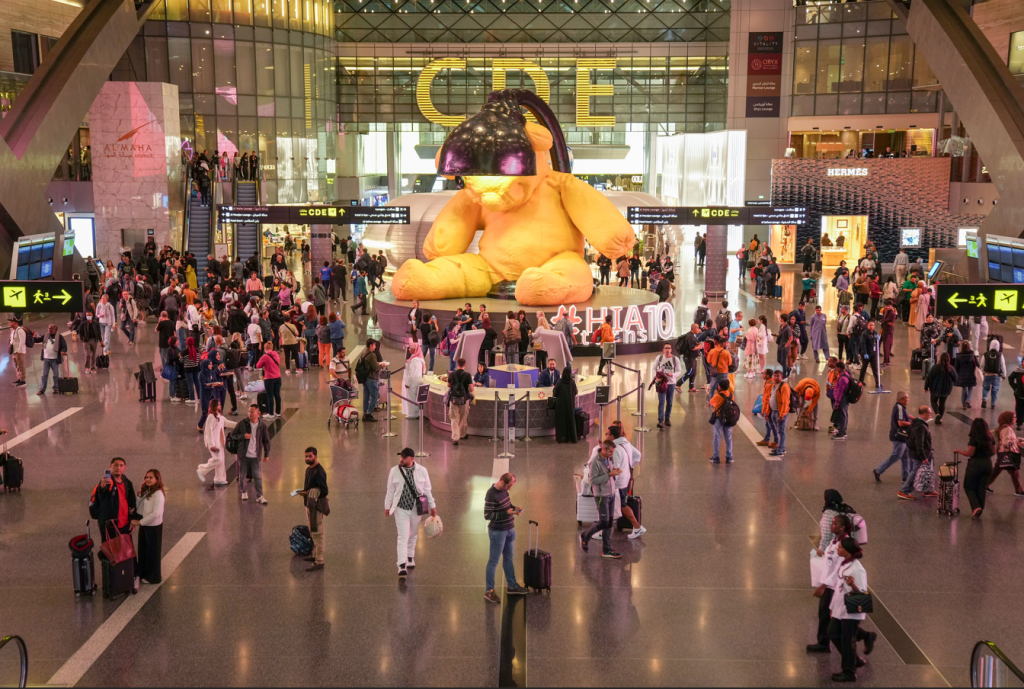
Air travel across the region is stabilising, with Gulf carriers taking the lead. Flight schedules are starting to expand again, and disruption levels have eased a lot compared to earlier in the conflict.
- Cancellation rates have steadied at around 10%
- Emirates and Etihad are operating reduced but growing networks
- Qatar Airways is scaling back towards its 120+ destinations
Capacity is still below normal, with millions of seats (5.4million) and flights (18,000) being cut in April, and this is expected to continue into May for some destinations like Hong Kong’s Cathay Pacific. But the bigger shift is strategic with recent industry reports suggesting the region is already moving beyond recovery into renewed global aviation competition, with Dubai, Doha and Riyadh doubling down on connectivity and growth.
Even as international airlines remain cautious, Middle Eastern carriers are pushing forward by restoring routes, adjusting pricing and settling back into their role as global travel hubs.
Hotels: A strategic reset
Dubai’s hotel sector is using this moment to reposition. Some have jumped on the staycation trend, doubling down on domestic demand, and promoting stays specifically to regional and domestic guests.
Meanwhile, several high-profile properties have entered renovation phases, including the Jumeirah Burj Al Arab, Armani Hotel Dubai and JW Marriott Marquis. Others are following with phased upgrades ahead of the next growth cycle.
What’s notable is that pricing remains largely stable and premium restaurants are still near capacity, which shows this is a planned reset, not a reactive slowdown. Operators are investing now to come back stronger.
Destinations: Resilient, active and looking ahead
On the ground, the UAE remains fully operational, with steady domestic activity and signs of returning confidence. While international travel is still recovering, everyday life, and tourism infrastructure, continues fairly uninterrupted.
Malls are busy, dining remains strong, and key attractions are not only opening, but putting on expanded programs. Louvre Abu Dhabi has extended World Art Day celebrations until 31 May, while the Abu Dhabi Zayed National Museum has expanded its public programme across the UAE. There’s a strong sense of national unity driving momentum, reflected in initiatives like the “Run for the Nation,” which brought together more than 25,000 participants this month.
At the same time, emerging destinations are also gaining traction. Ras Al Khaimah (RAK) and Umm Al Quwain are accelerating investment in wellness, nature-based tourism and luxury experiences, to position themselves as alternatives to Dubai. Projects like Al Marjan Island are also being developed as future lifestyle destinations, while established ultra-luxury resorts continue to report strong occupancy levels, despite wider uncertainty.
Major infrastructure is also shaping the next phase. The Etihad Rail passenger network, launching in 2026, will connect 11 cities across the UAE, and unlock new domestic travel options to support long-term growth.
Cruise: Confidence returns to the water
The cruise sector is also seeing a breakthrough moment. Recent successful transits through the Strait of Hormuz led by coordinated efforts between operators and regional authorities, have re-established safe passage in the region.
As a result of several cruise ships completing secure, coordinated journeys, operators are looking to reposition and resume schedules. AROYA Cruises, who had previously said they were cancelling the rest of the Gulf season, is set to restart Red Sea sailings in May. It’s a key signal that even the most sensitive segments of the industry are starting to move again.
The bigger picture: A region moving forward together
What stands out most isn’t just recovery, it’s coordination. Across aviation, tourism and infrastructure, governments and industry players are working together to rebuild momentum. The UAE, in particular, continues to position itself as a stable, connected and forward-looking destination, setting the pace for what comes next.