

Etihad Airways has announced it is scaling up its China operations, unveiling five new routes and boosting frequencies to a total of 35 weekly flights between Abu Dhabi and mainland China. The expansion begins in October 2026, with a phased rollout continuing through March 2027.
The airline will launch services to Shanghai Pudong, Guangzhou, Chengdu, Hangzhou and Shenzhen, significantly expanding beyond its current daily flight to Beijing Daxing. Once complete, Etihad will operate across six mainland Chinese destinations, marking one of the largest single-market increases in its recent history.
A bet against industry trends
The scale of this move is particularly interesting as international demand in the China travel market has not yet fully recovered to pre-pandemic levels, and many global airlines have been cautious about restoring capacity. Etihad, however, is taking the opposite approach, committing widebody aircraft and ramping up frequencies in a market that others are still watching carefully.
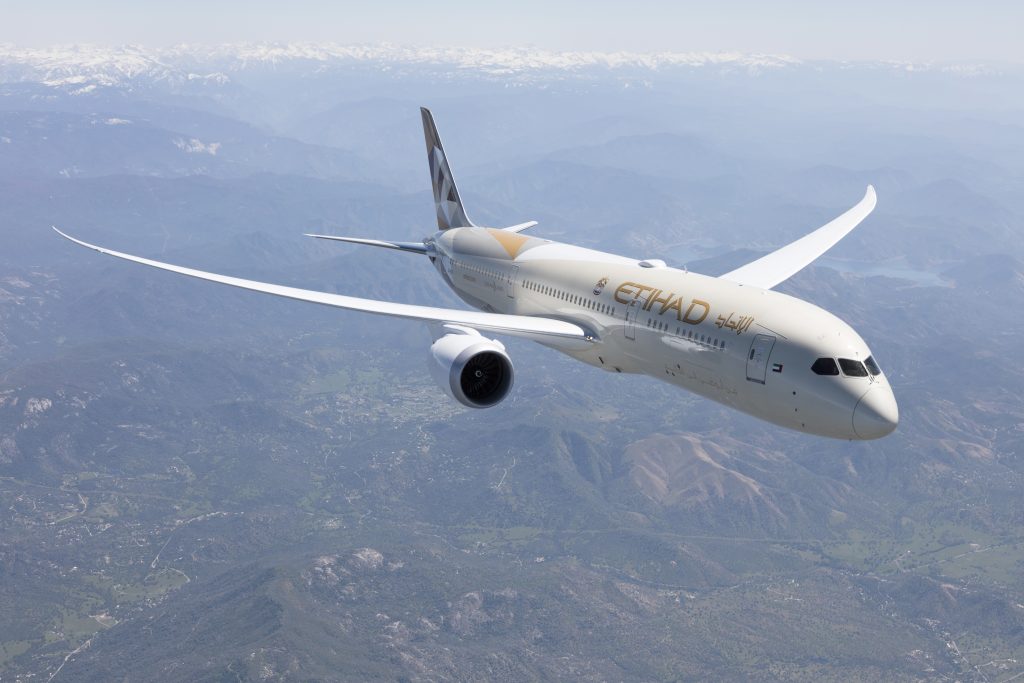
All routes will be operated by Boeing 787-9 Dreamliners, offering a consistent onboard experience across Business and Economy cabins. But beyond passenger comfort, the expansion is a clear strategic play focused on long-term growth rather than short-term returns.
Partnerships powering growth
A key driver behind the expansion is Etihad’s joint venture with China Eastern Airlines. The partnership will allow for coordinated scheduling and improved connectivity across both carriers’ networks, strengthening links between major Chinese cities and Abu Dhabi.
On the cargo side, Etihad is also leveraging its partnership with SF Airlines to enhance freight capacity. This is particularly important as global supply chains remain under pressure, with demand for reliable air cargo links between Asia and international markets continuing to grow.

Strategic cities, global reach
Each of the five new destinations plays a distinct role within China’s economic landscape. Shanghai acts as a global financial and logistics hub, Shenzhen is a leading technology centre, and Guangzhou remains a critical manufacturing gateway. Meanwhile, Hangzhou and Chengdu are rapidly growing hubs for digital innovation and high-tech industries.
By linking these cities to Abu Dhabi, Etihad is positioning its hub as a key transit point connecting China with Europe, Africa, the Middle East and North America.
High stakes in uncertain times
The timing of the expansion reflects a broader shift in global aviation strategy. With geopolitical tensions, trade uncertainty and uneven demand shaping airline decisions, Etihad’s push into China stands out as ambitious and high stakes.
Committing significant long-haul capacity to a single market could limit flexibility elsewhere in its network. However, it may also give Etihad an advantage over regional competitors if demand rebounds faster than expected.
For now, the airline is making a clear statement that while others remain cautious, it is doubling down on one of the world’s most important, and unpredictable, aviation markets.