
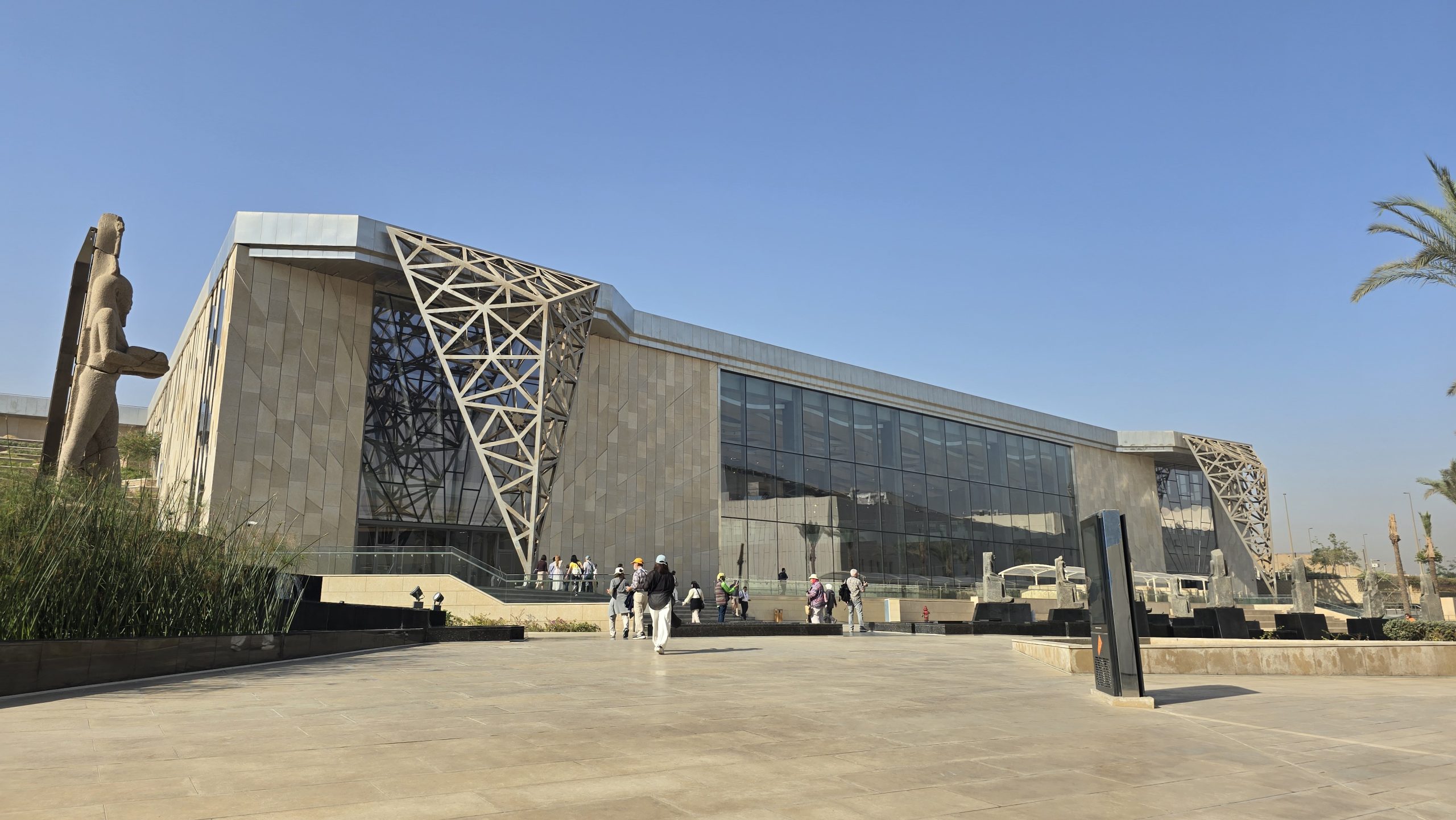
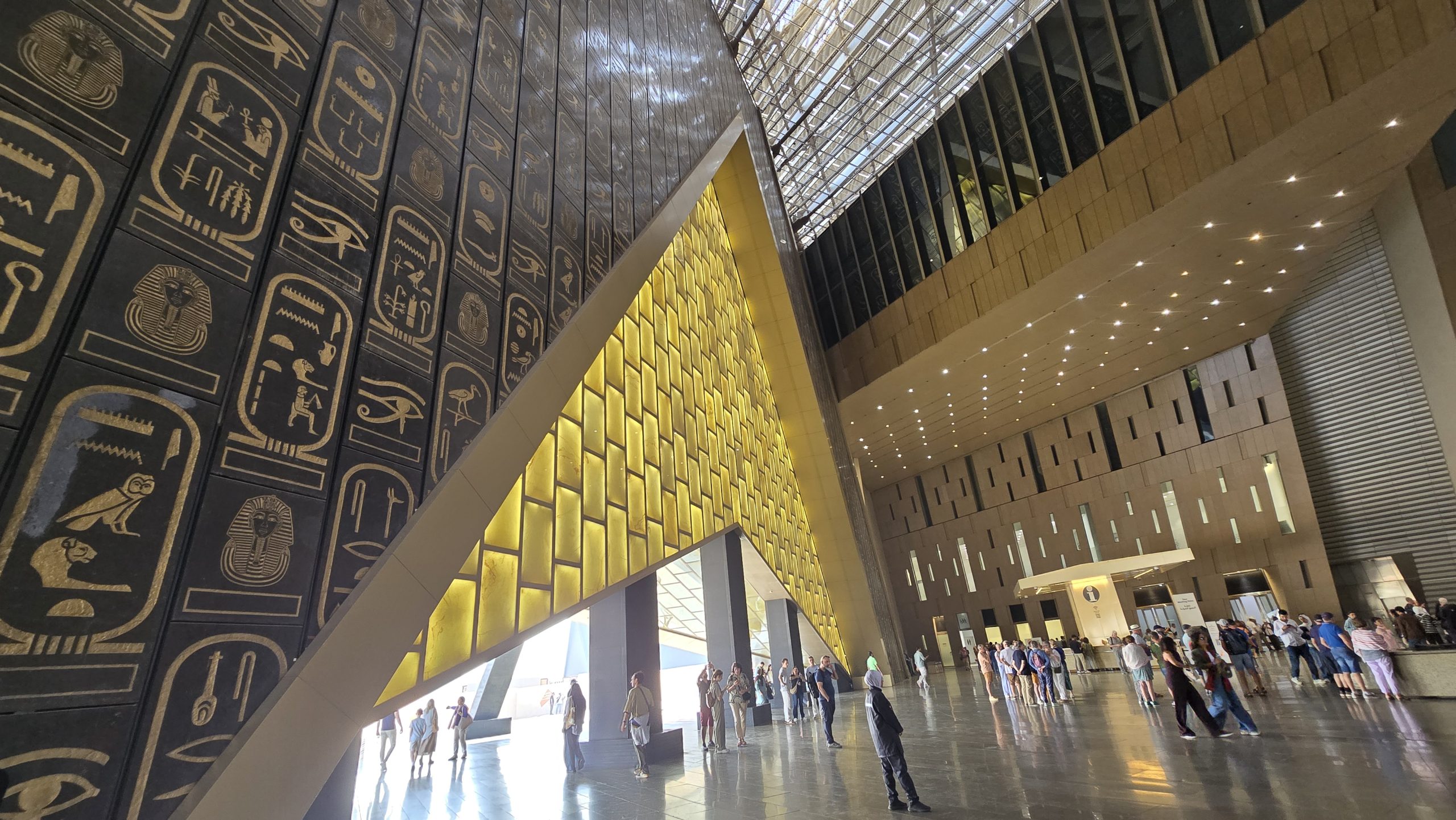
In 1992, Egypt took the first steps toward realizing its grand dream when an area of 117 acres was allocated near the Giza pyramids, destined to become the home of one of the largest museums in the world: the Grand Egyptian Museum (GEM).
In 2002, the foundation stone was laid, marking the start of a long journey filled with challenges and ambitions. Just one year later, in 2003, the Irish architectural firm Heneghan Peng was selected to design the museum after winning an international architectural competition.
Between 2005 and 2008, construction began, and the project’s features began taking shape.
In 2010, the museum’s Conservation Center was inaugurated, becoming a global hub for preserving and restoring Egyptian archaeological treasures.
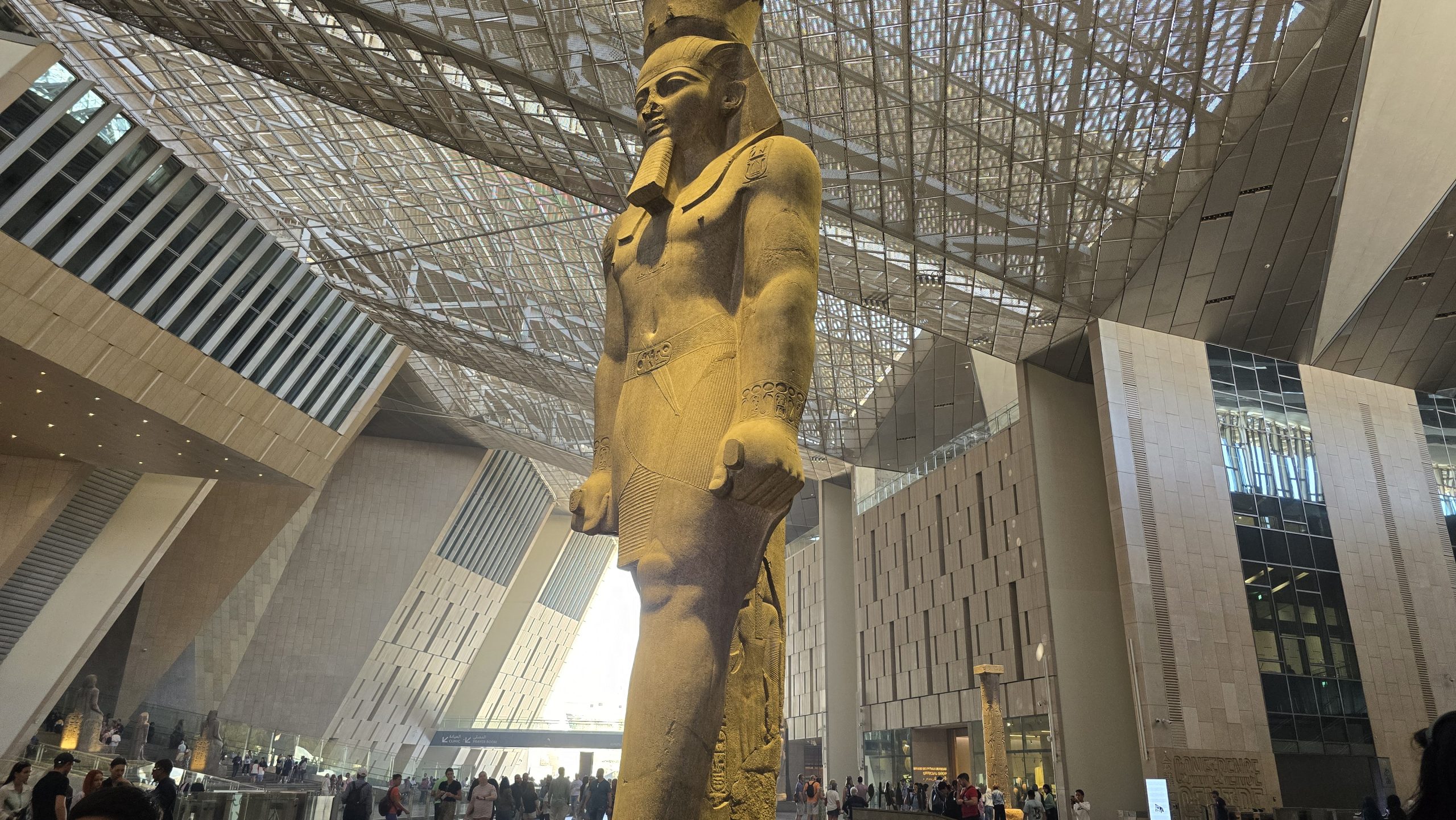
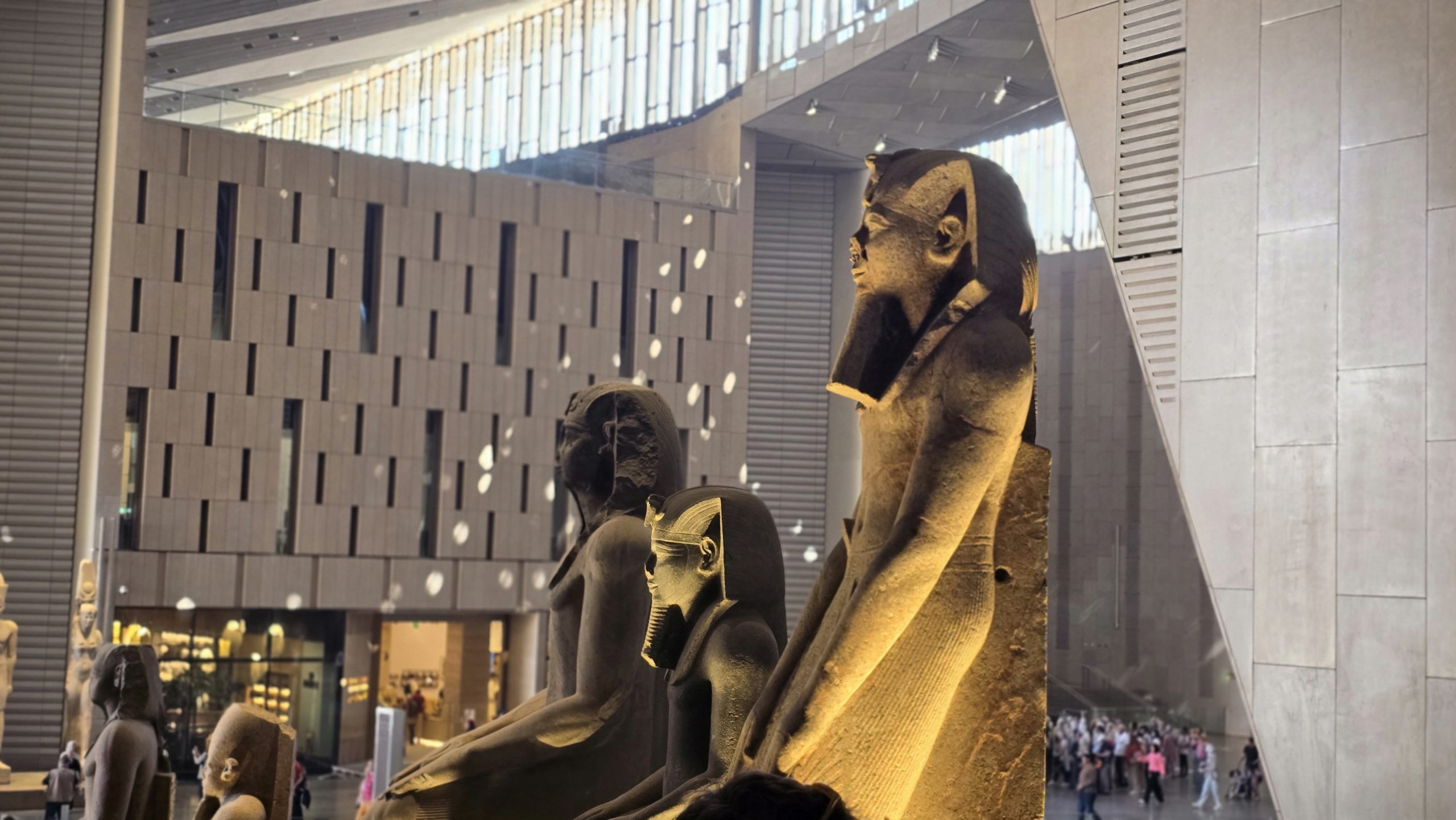
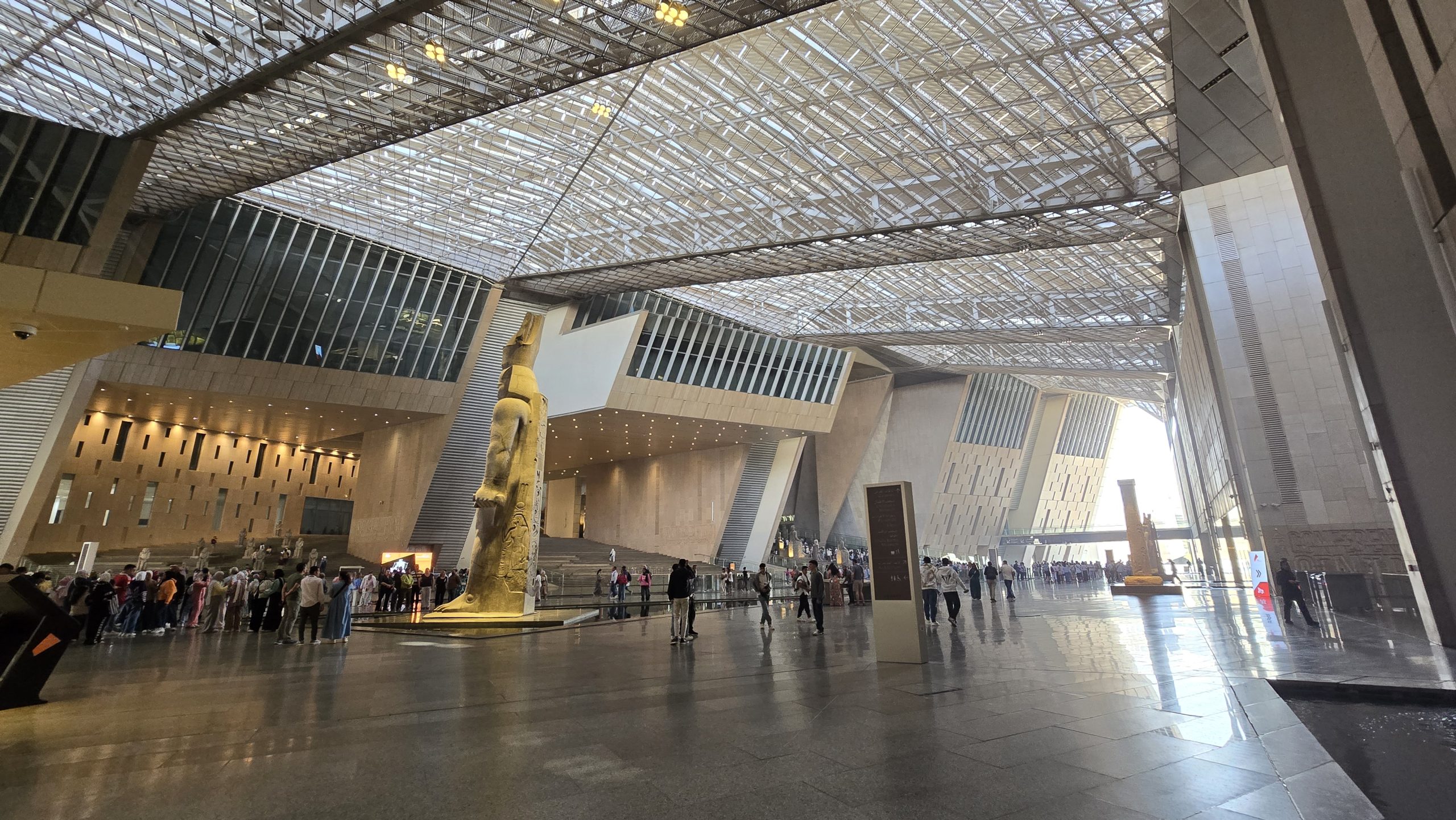
As the project’s scale and significance grew, President Abdel Fattah el-Sisi called for accelerated work in 2015 and 2016, continuing Egypt’s journey toward fulfilling the museum’s dream. In 2018, the Grand Hall welcomed the statue of King Ramesses II, the first artefact to find its home at the heart of the museum.
Achievements continued over the years, with construction completion reaching 97% in 2020. In 2021, the museum’s digital infrastructure reached 90% completion, paving the way for GEM to become a modern hub of technology and heritage.
In 2023, the Grand Stairs partially opened to visitors, offering a majestic introduction to the splendor of Egyptian civilisation. Subsequently, in 2024, the partial opening of the main galleries provided the world with a glimpse of the unique treasures to be exhibited.
In 2025, on the first of November, the Grand Egyptian Museum opened its doors as an international destination that presents history spanning thousands of years, with each object telling the story of Egypt’s civilisation.
GEM is the largest global museum dedicated to ancient Egyptian civilisation from prehistory to the end of the Greek and Roman periods. Here, you uncover the stories behind the artefacts, some discovered mere feet from the GEM.
The museum serves as a bridge between the past and present, blending the grandeur of ancient Egyptian civilisation with cutting-edge museum technology.
Sustainability
The Grand Egyptian Museum (GEM) is committed to being a global leader in sustainability by integrating the latest scientific practices into all its activities. We aim to preserve Egypt’s unique cultural heritage while contributing to a more sustainable future for generations to come.
GEM aligns with Egypt’s Vision 2030 through three main goals: environmental sustainability, social sustainability, and financial sustainability, which guide its efforts toward sustainable development and the preservation of cultural heritage. Through these goals, GEM aspires to serve as a model in applying sustainable practices.
Environmental Sustainability
Sustainable Building & Design
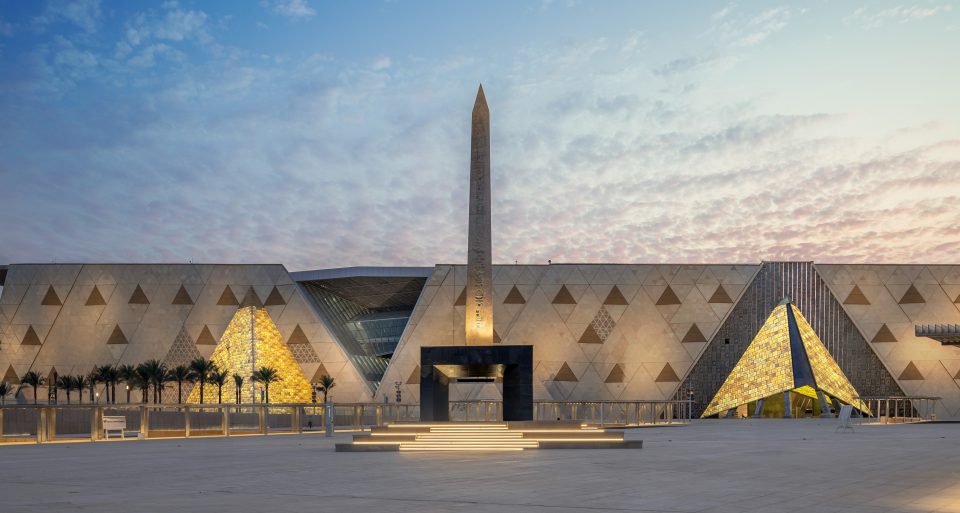
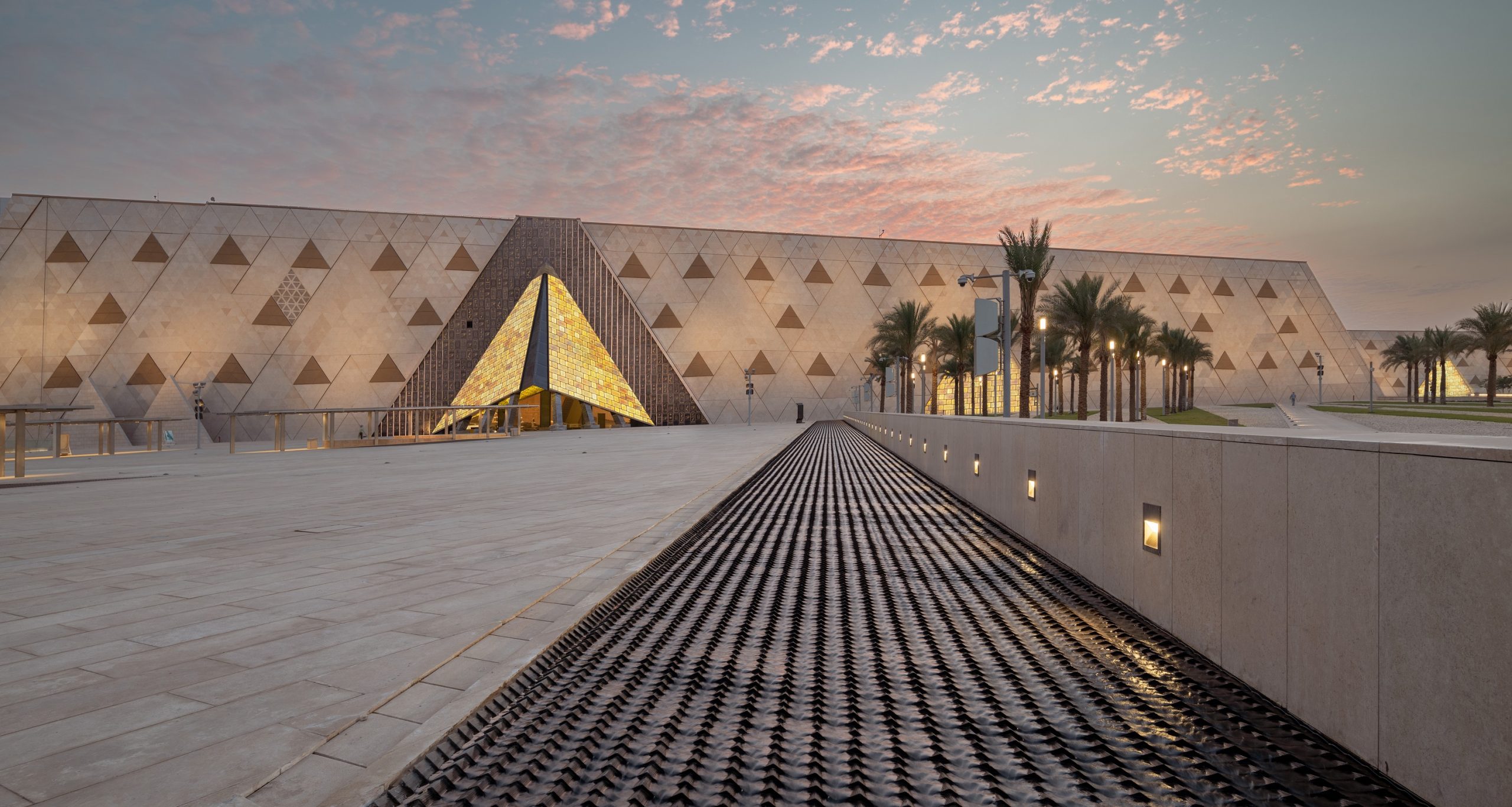
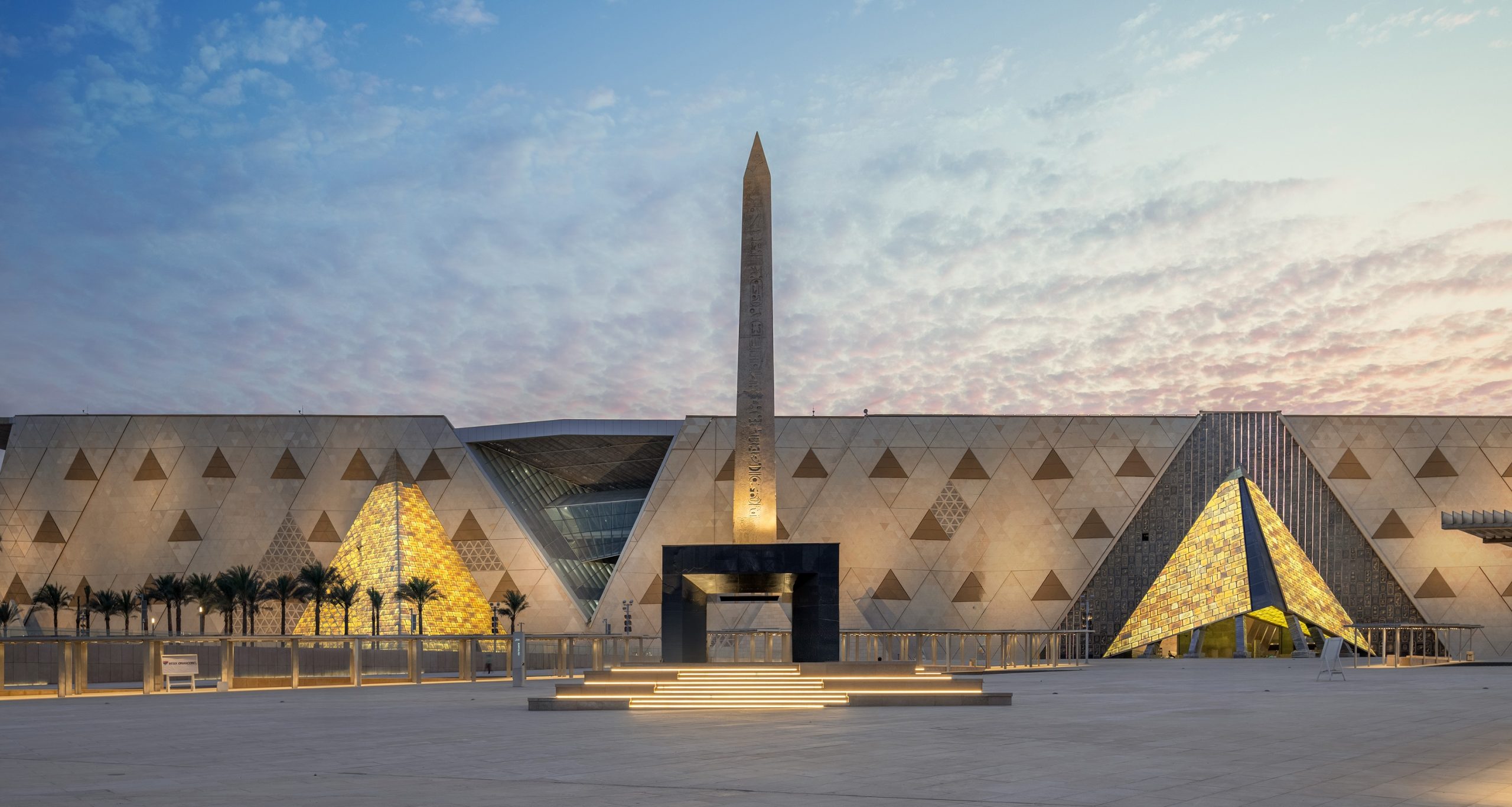
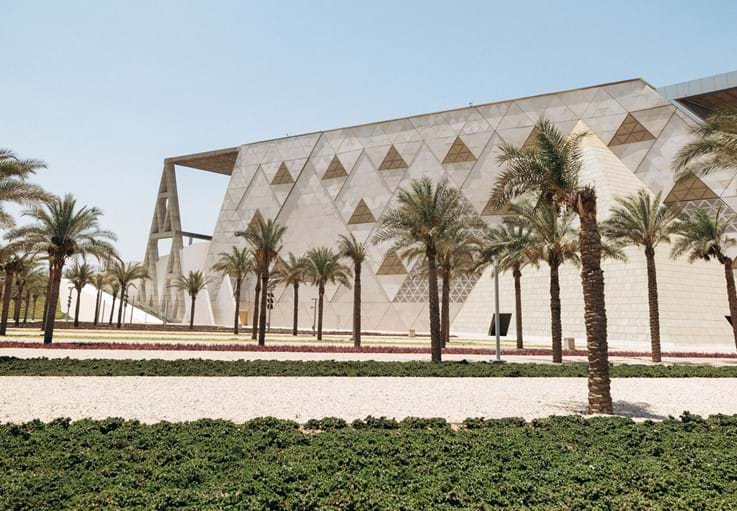
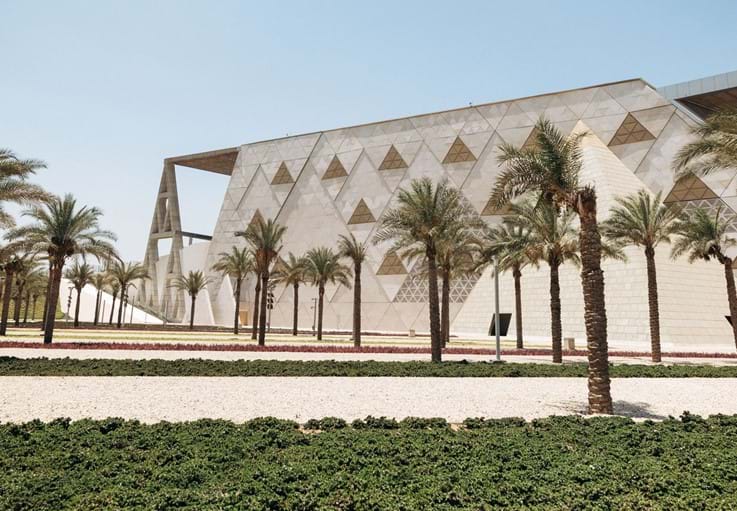
GEM was established to reflect Egypt’s civilizational heritage while prioritizing environmental sustainability. An international competition attracted 1,557 architectural firms from 83 countries. The winning design, submitted by the Irish firm Heneghan Peng, presents the museum as a conical structure inspired by the sun’s rays extending from the three pyramids. The design blends simplicity and resource efficiency with elements rooted in ancient Egyptian architecture. It frames views of the pyramids and includes green spaces for air purification and cooling systems based on ancient Egyptian ventilation, integrated with modern technologies, using Egyptian marble and granite from the local environment.
Energy Efficiency & Carbon Reduction
The museum employs an intelligent energy management system that includes the use of solar panels, low-consumption LED lighting systems, and natural ventilation techniques. These systems have contributed to achieving energy savings of 62% compared to conventional standards, along with a significant reduction in carbon emissions, reinforcing the museum’s role as a global model in minimizing carbon footprint.
Water Management and Building / Material
The museum’s water management system features advanced rainwater harvesting and reuse for irrigation, alongside water-saving fixtures and smart irrigation techniques. It also employs intelligent techniques for leak detection and loss reduction. Sustainable local building materials are utilized to enhance project longevity, with Egyptian marble and granite employed to emulate traditional practices, thereby reinforcing harmony with the local environment.
Sustainable Facilities
The museum’s facilities feature smart environmental controls managing lighting, heating, cooling, and indoor air quality, creating a healthy and sustainable environment. Services include conference halls and restaurants that adhere to sustainability standards, enhancing visitor experience with minimal environmental impact. Green spaces and open walkways enhance visitor experience and reconnect them with nature, fostering a holistic and health-conscious environment with reduced ecological impact.
Improve Public Image
The Grand Egyptian Museum stands out as a leading model of commitment to sustainability and innovation, enhancing its public image both locally and internationally. The museum has received a number of prestigious international certifications, such as ISO and EDGE, in recognition of its adherence to the highest standards of quality and sustainability.
In this context, the museum project earned the EDGE ADVANCE certification for green buildings, granted by the International Finance Corporation (IFC), a member of the World Bank Group, making it the first green museum in Africa and the Middle East. The evaluation covered measures for energy efficiency, the use of clean energy sources, the installation of solar panels, and the application of natural lighting and ventilation systems.
The museum has also obtained eight ISO certifications in the fields of energy, quality, occupational health and safety, and environment, in addition to winning the Best Project Award in Green Building, and the Gold Certificate for Green Building and Sustainability under Egypt’s Green Pyramid Rating System issued by the National Housing and Building Research Centre.
GEM Education Centre
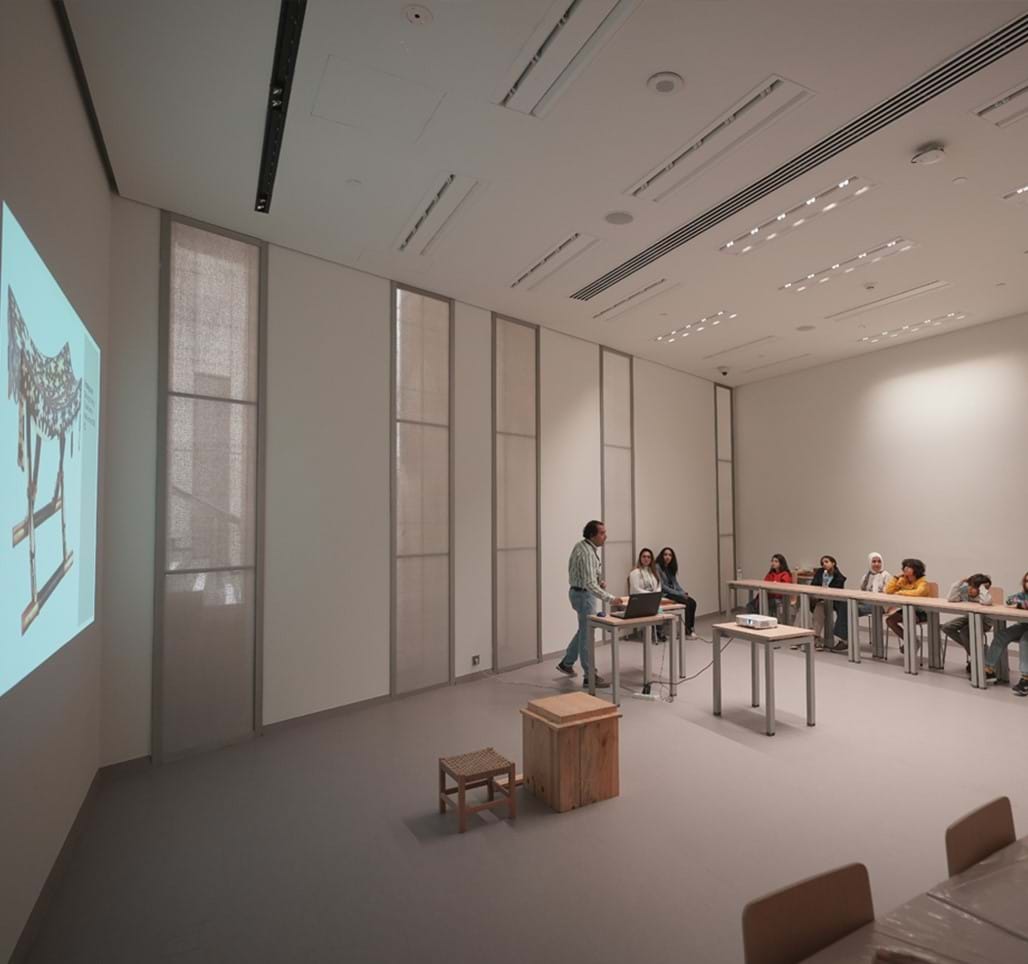
As part of the GEM Learning Sector, the GEM Education Centre aspires to be a place of ideas and experiences that offer insight into the culture and history of ancient Egypt. By empowering everyone to create reference points between their lives and other peoples throughout time and across cultures, the Education Centre will offer relevant learning experiences.
Arts & Crafts Centre
As part of the GEM Learning Sector, the GEM Arts & Crafts Centre will be instrumental in setting the tone for art and design standards in education in Egypt. The Centre will contribute to the safeguarding of Egyptian traditional craftsmanship which is one of the main domains of intangible cultural heritage, while creating new avenues of economic industry. By supporting traditions of established craftspeople while encouraging emerging artists and designers, the GEM Arts & Crafts Centre is devoted to building a strong teaching, learning, and research community giving voice to a compelling vision of art and design in Egypt.
Collection
- Hanging Obelisk
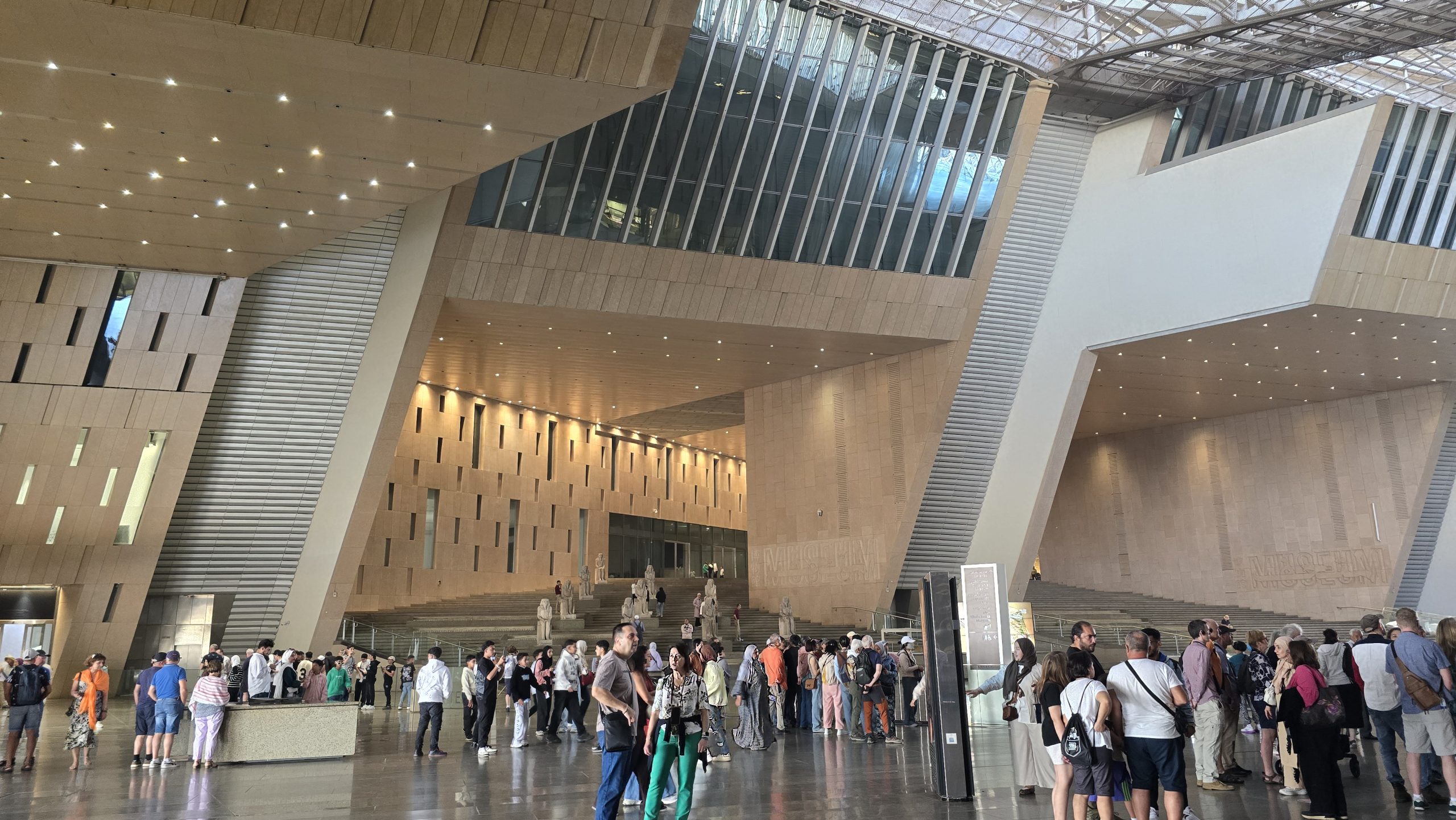
- Grand Hall
- Grand Stairs
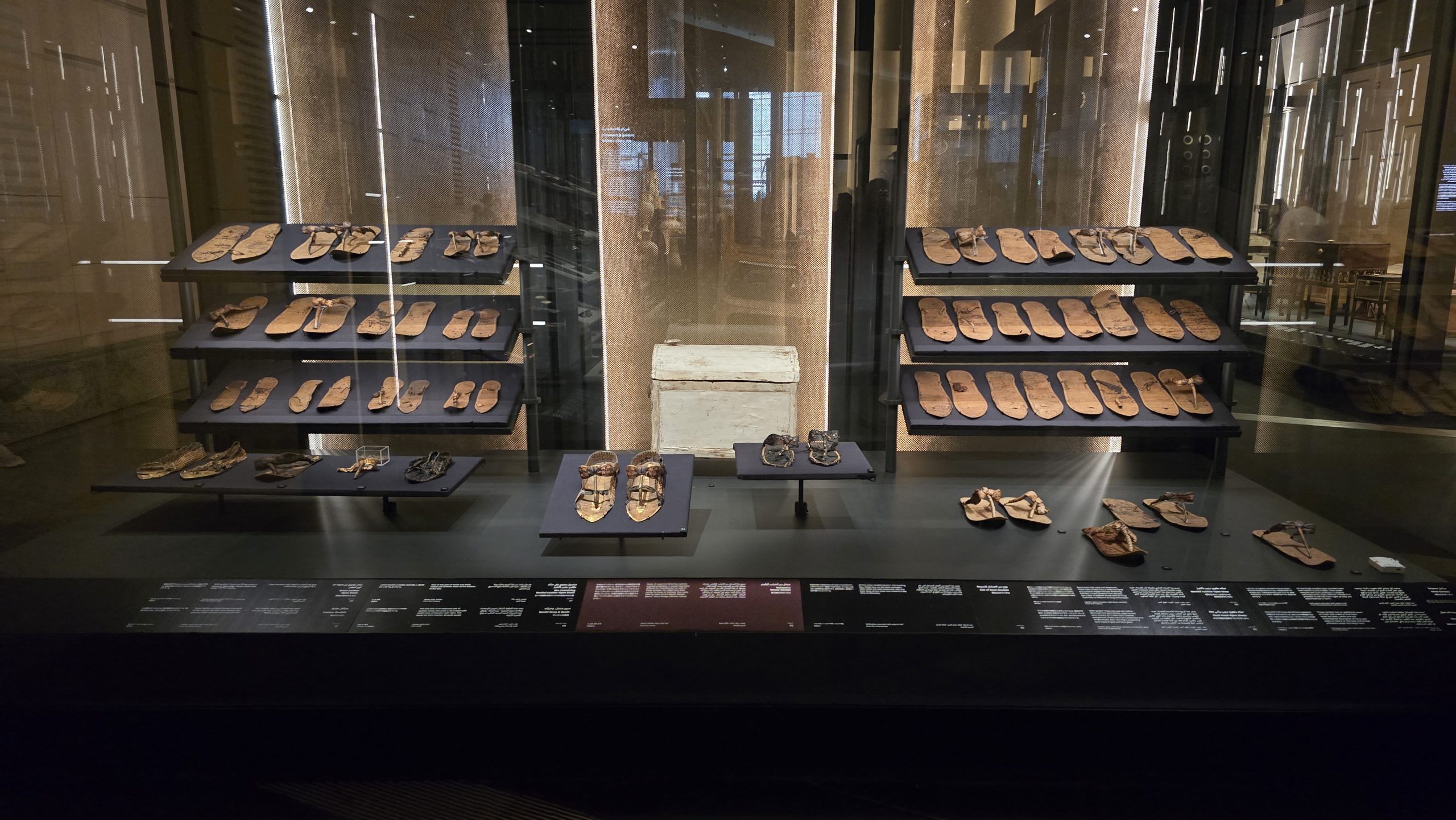
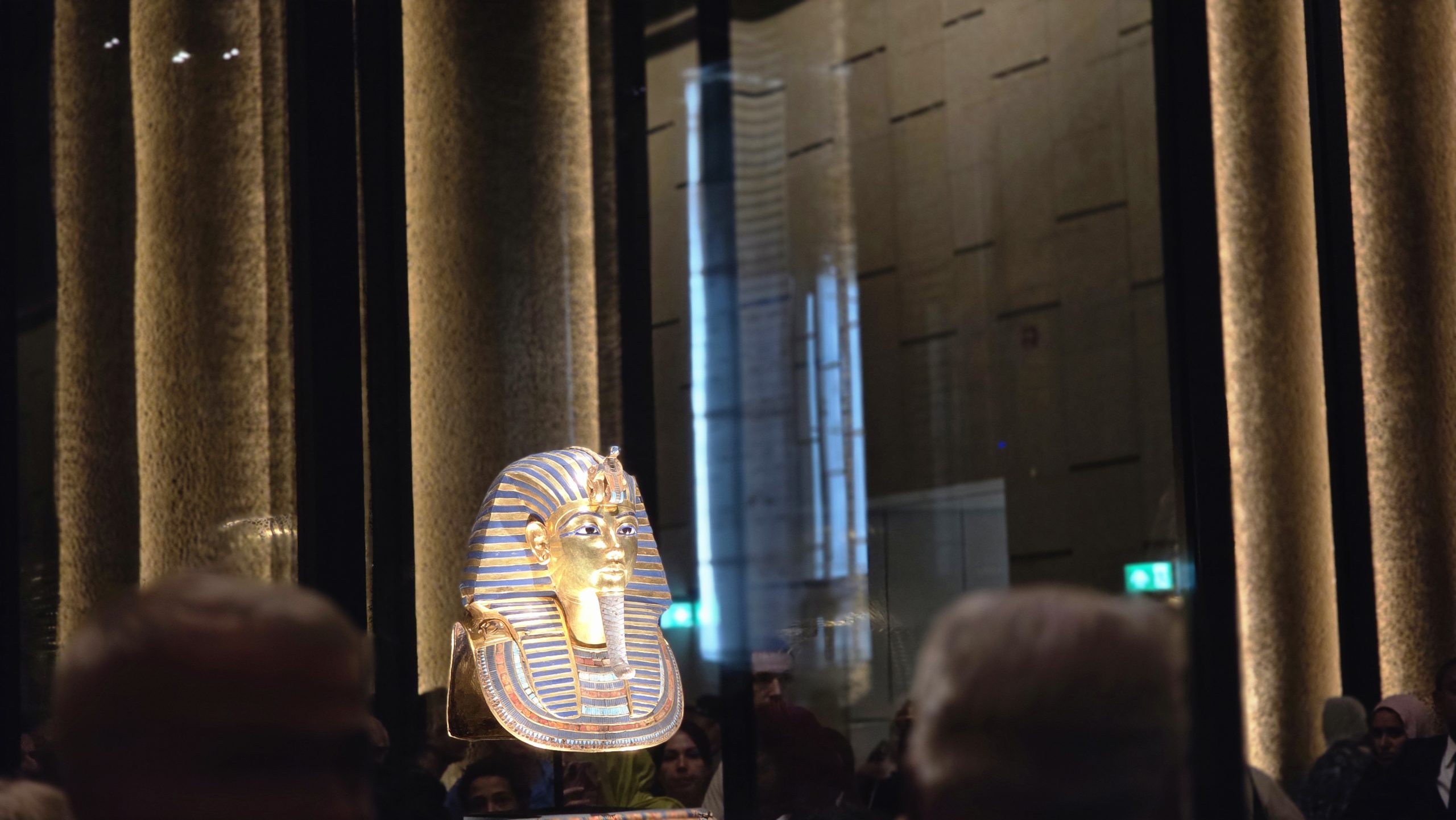
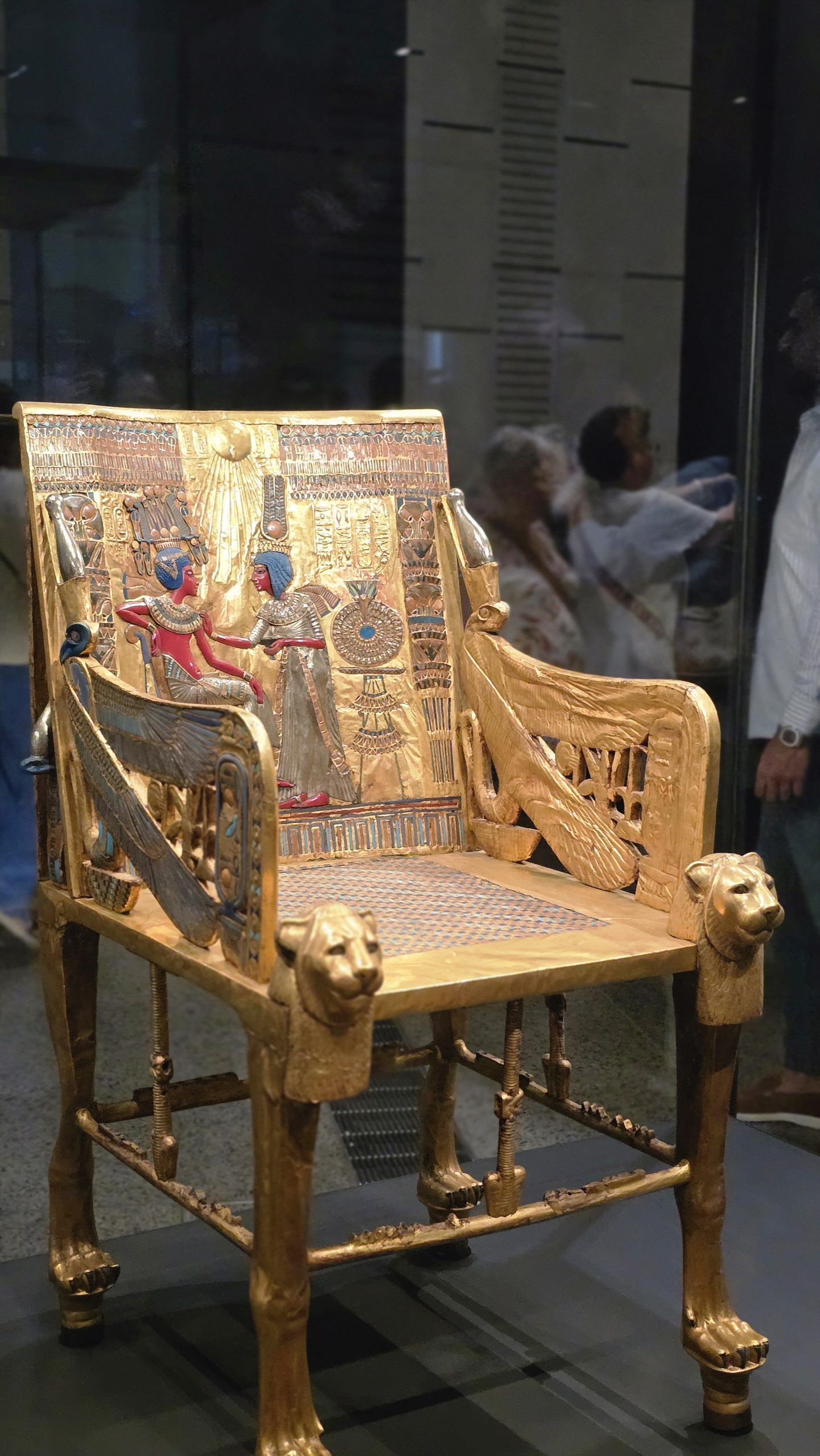
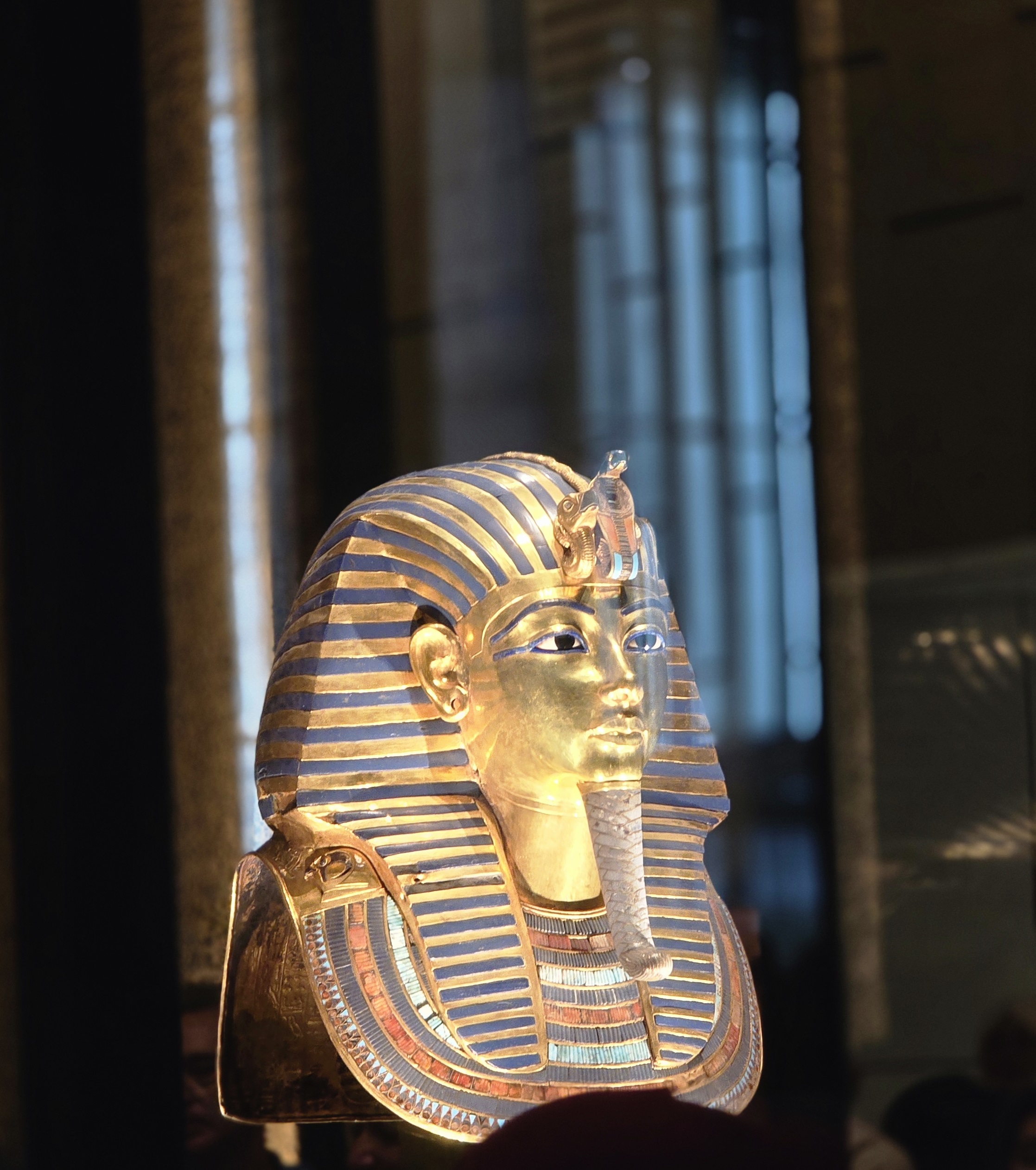
- Tutankhamun Galleries
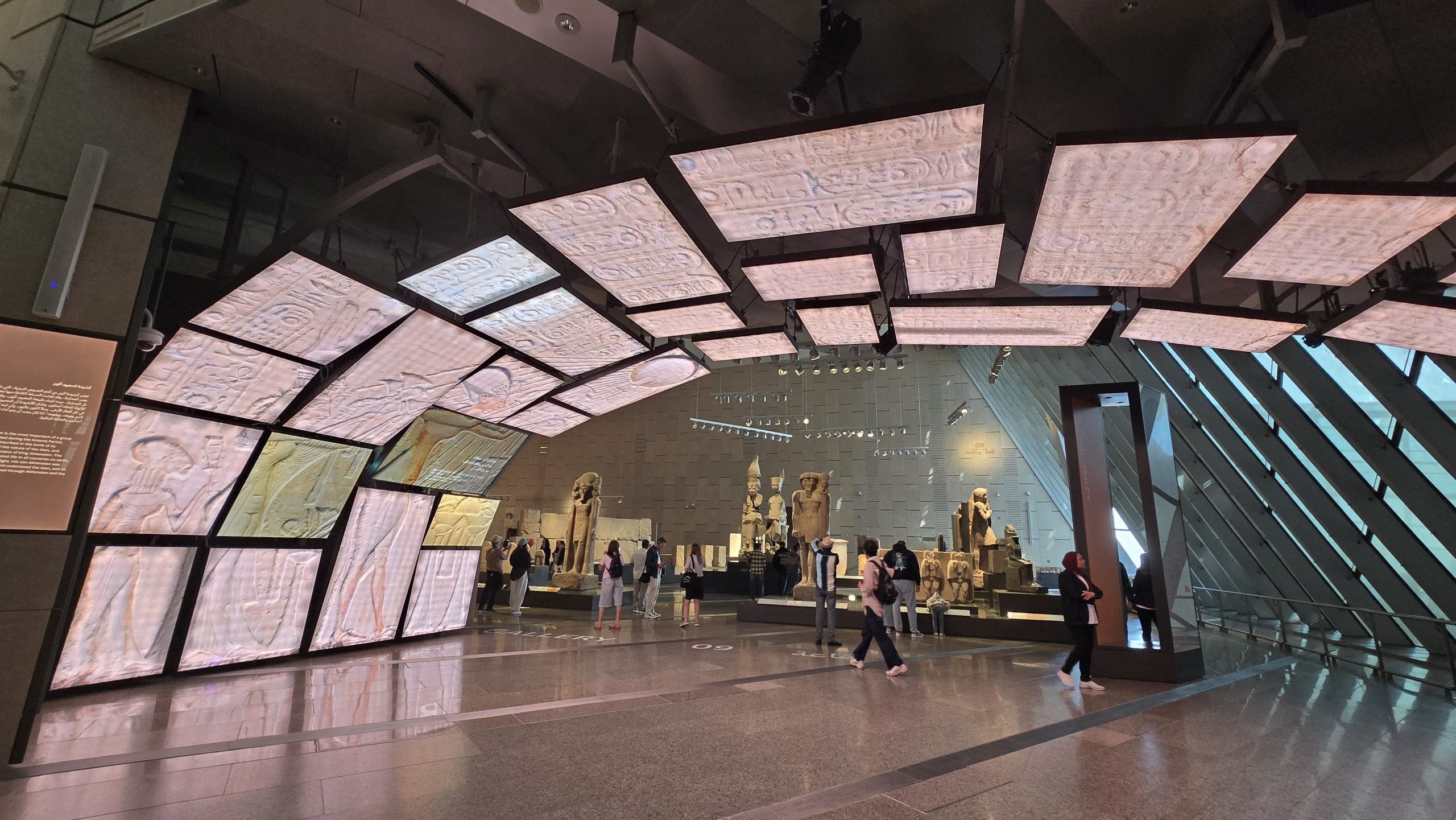
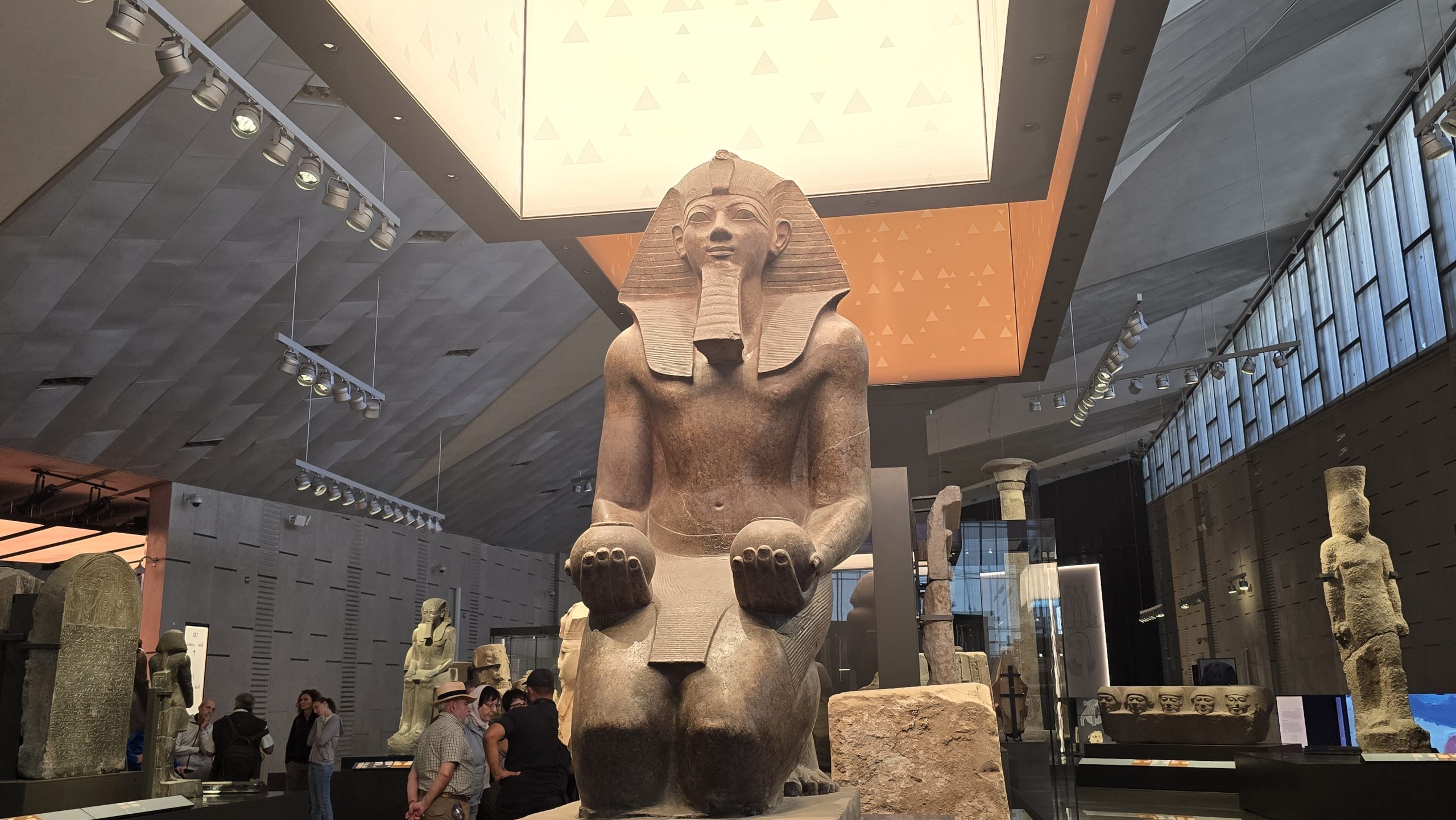
- Main Galleries
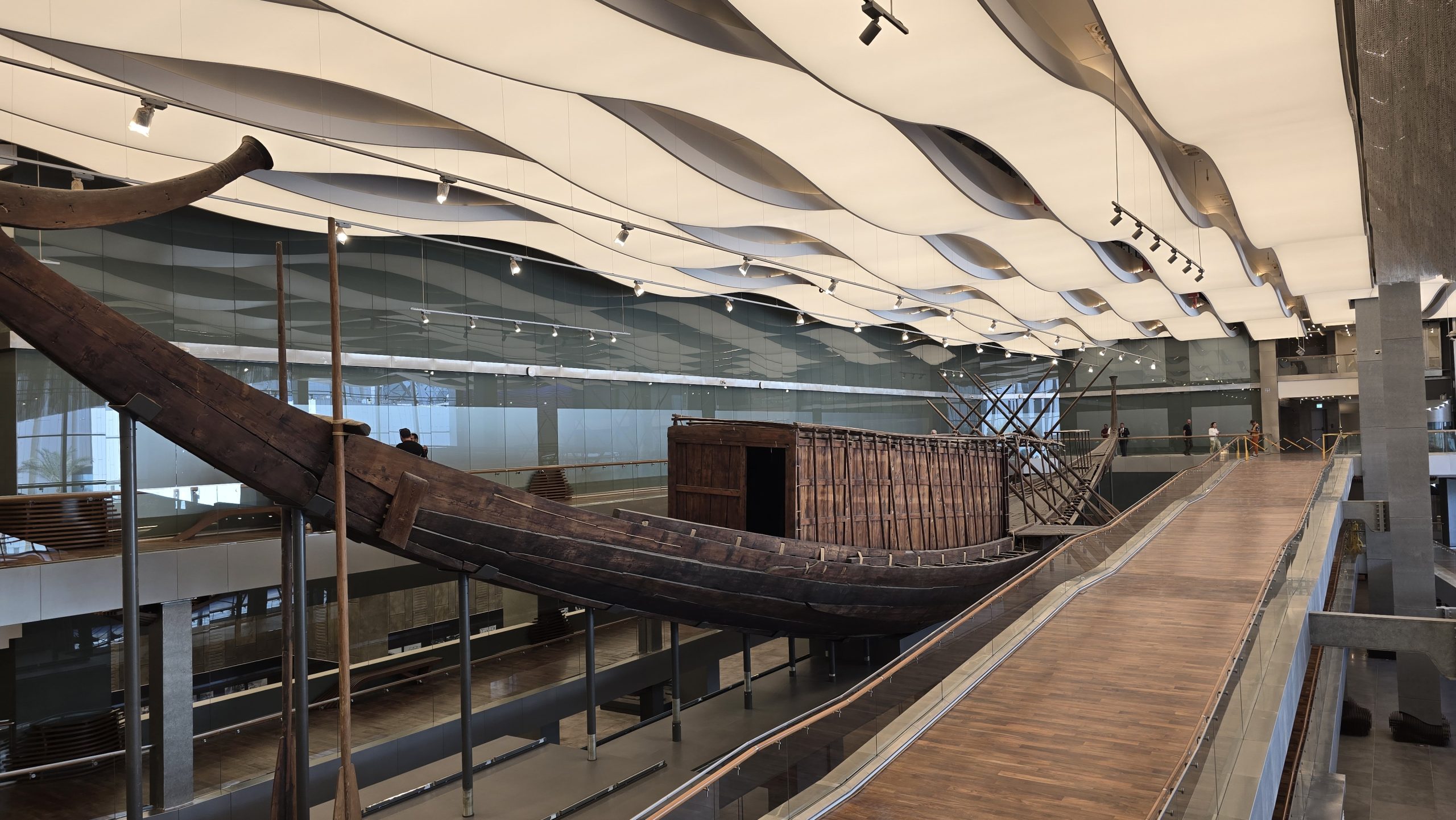
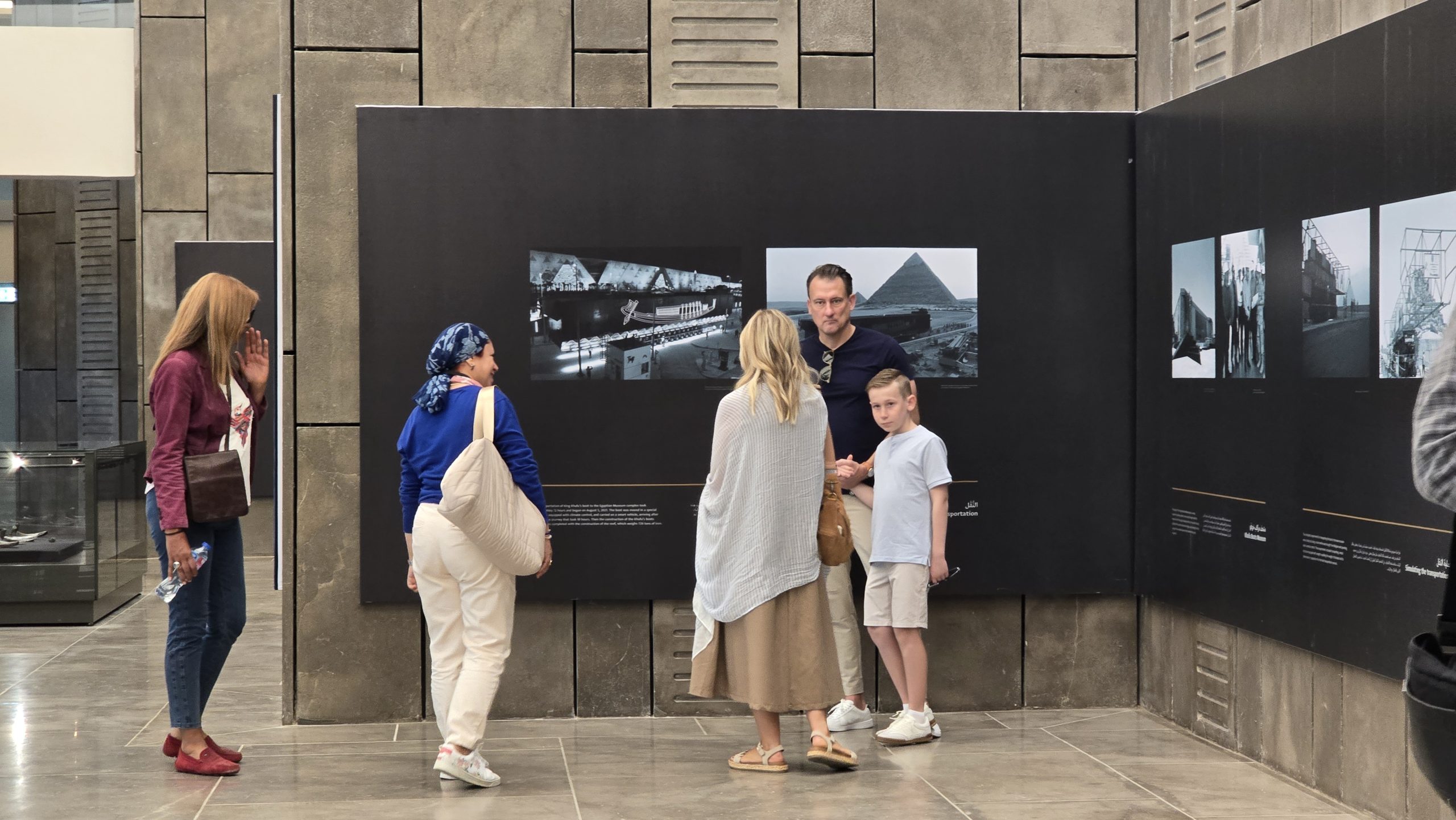
- Khufu’s Boats Museum
Origins of the Pyramids: A Mixed-Reality Experience
Step into the world of ancient Egyptian beliefs with our cutting-edge mixed reality experience. Journey through their concepts of death, burial, and rebirth, and witness the incredible engineering behind the construction of the pyramids. This immersive technology brings history to life, offering a captivating blend of education and innovation that will leave you in awe.
Important Information:
- The experience is available in English and Arabic only
- The experience lasts approximately 15 minutes and visitors must arrive 10 minutes before their scheduled time
- This experience is not suitable for children under 6 years
- Each time slot accommodates up to 8 participants
- Not recommended for individuals prone to motion sickness, dizziness, or with medical conditions such as epilepsy or heart issues
Book your add-on experience on-site at the Grand Egyptian Museum.
Opening Hours
Daily except Saturdays and Wednesdays
- GEM Complex: 8:30 AM – 7 PM
- Galleries: 9 AM – 6 PM
- Last ticket purchase: 5 PM
Saturdays and Wednesdays
- GEM Complex: 8:30 AM – 10 PM
- Galleries: 9 AM – 9 PM
- Last ticket purchase: 8 PM
GEM Children’s Museum
- Sunday to Thursday: 1 PM – 5 PM
- Friday & Saturday: 10 AM – 5 PM